Welcome to Fulxing Intelligent - SMT Automation Equipment
 简体中文

Customer Service Hotline
18565526634
Welcome to Fulxing Intelligent - SMT Automation Equipment
18565526634
Contact: Mr. Yang
Mobile: 18565526634
Tel: 18565526634
Email: 1404870852@qq.com
Address: Songyu Rd 142, Songgang St, Bao'an Dist., Shenzhen, China
A supplier visit is not a courtesy call. Every showroom has a polished demo machine and a smooth presentation, and none of it tells you whether your order ships on time or who answers when the machine stops. That information lives behind the showroom, in five specific places.
Walk into the assembly area first. A plant that actually manufactures will have work in progress: a frame standing without rails yet, a control cabinet open mid-wiring, fixtures spread across a bench. It is not pretty and it cannot be faked, which makes it the most reliable evidence available.
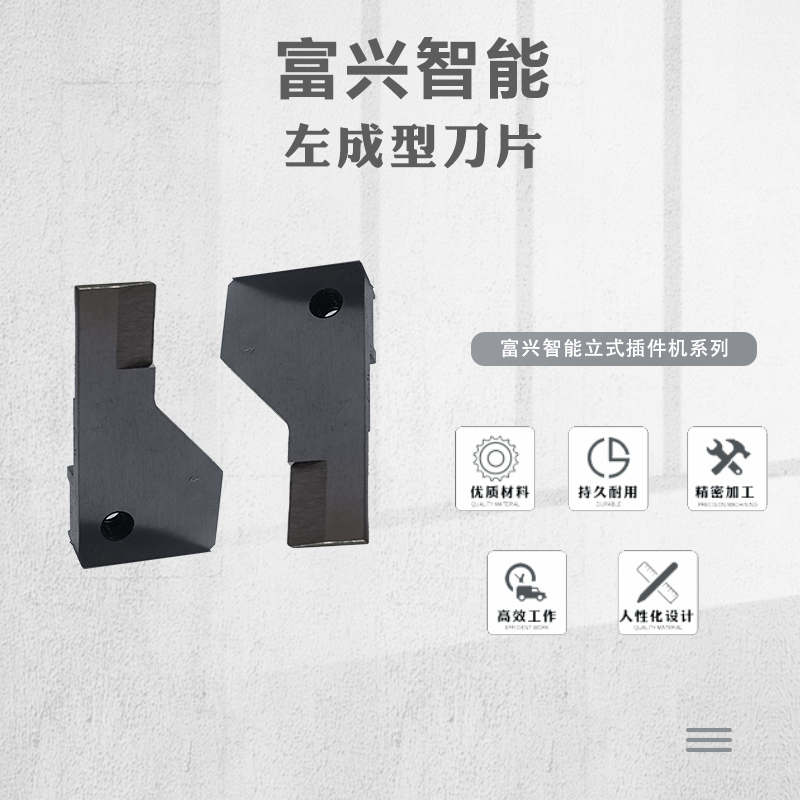
If the floor holds one demo machine, some office desks and a stack of cartons, you are looking at a trading company relabeling someone else's equipment. That is not automatically disqualification, but the margin you are paying went to an intermediary, and service will route through one extra party.
Glance at the machining area while you are there. A precision shop with rail and screw stock on the rack means non-standard fixtures can be modified in-house. Full outsourcing means a custom gripper waits behind two production queues.
Most buyers at a trial run stare at the last board. It went in, it sits straight, it looks right, so it must be fine. One good board proves the machine can insert right now. It says nothing about hour eight.
The information is in the process. Stand beside the machine for half an hour and watch three things. Insert the same hole ten times in a row and check positional consistency for drift you can see. Count how often it jams and how long recovery takes, whether it clears itself or an operator has to take the tape apart. Compare cycle time in the first ten minutes against the thirtieth.
Any one of those failing costs more than throughput. When accuracy drifts, a lead that misses its hole hits the pad, the barrel lifts, and the board is scrap. Rework cannot save it. Frequent jams cost differently: the operator spends the shift pulling tape apart, and yield falls with attention.
Stability is not something a supplier can talk into existence. Ask for hard evidence instead. Patents on the core drive and the insertion mechanism. In-house control software with copyright registration. A production defect rate they are willing to put a number on.
Our position on this rests on owning both the hardware and the software. Two utility model patents cover the high-speed CTA drive mechanism (ZL202121774038.6) and the insertion head actuator (ZL202121774064.9), so the mechanical structure is original design, rigid enough to hold its geometry through continuous running. The control software, Fulxing Automatic Vertical Insertion Machine V1.0, carries full software copyright registration (2021SR0291078) and depends on no third-party license, which means parameters and algorithms can be changed in-house. In production, defect rates stay under 0.3 percent with 0.01mm insertion accuracy, a level in the top tier of domestic equipment.
The most concrete check on the list. Ask to see the parts store and look for physical stock of blades, grippers, belts and sensors.
Stock on the shelf means the supplier holds inventory against sales volume and can ship the day something breaks. No stock means every replacement waits on a production run: three to five days for common items, two to three weeks for non-standard ones. That wait is exactly the downtime cost calculated earlier, and this is where the switch sits.
Ask whether the common-parts price list can leave with you. Suppliers who hand it over usually price transparently; the evasive ones have their margin in that gap.
This is the core of the visit and the easiest part to get steered away from.
A demo always uses the board the supplier knows best, the smoothest components, a program already tuned. Of course it runs well. Bring your own board, your own reels, and specifically the parts that give you trouble today: tight hole diameters, soft leads, crowded component clusters.
The same three process checks from point two apply here, run with your components instead of theirs. What earns the extra attention is your difficult parts: holes that are tight, leads that bend easily, clusters where components crowd each other. Then have their operator switch the machine to a second product of yours, and time the changeover.
One detail worth arranging in advance: keep your own technician from helping. The moment your engineer starts guiding theirs, the machine stops showing how hard it really is to operate.
Sales can answer anything. Talk to the technician.
First: this board has a 25mm-tall electrolytic capacitor next to a connector sitting flush against the surface, how do you feed and how do you avoid interference. Second: the board is 200×150mm with 2.5mm center spacing at the densest point, will this machine insert it, and is the span range sufficient. Third: next year I add relays and terminal blocks, can this machine take an added module to become an odd-form inserter, or do I need a second machine.
None of these are difficult questions. A technician who cannot answer them will not be useful after installation either. One who sketches a feeding approach on paper and names the interference points unprompted is worth continuing with.
Service response time, asked concretely. Not "how is your after-sales support" but: for my city, how fast can an engineer arrive, and is that a local office or dispatched from headquarters. Then ask about loaner policy during a major overhaul.
That answer is often more useful than every specification on the datasheet. A good machine with nobody to service it is a piece of iron sitting on your floor.
A visit costs a few hundred dollars in travel. A wrong machine costs tens of thousands. Bring your three hardest process questions written down, and one trip will tell you most of what you need.
Our assembly and testing area is documented on the about page, and you are welcome to schedule a visit with your boards and run them on the floor. SMT line equipment can be reviewed in the same trip if you are planning a full line.
Q1: What should I bring to a supplier factory visit?
Three things: the board that gives you the most trouble, the matching component reels, and a BOM. Add a written list of your three hardest process questions. That combination yields more than any number of brochures.
Q2: What if the supplier will not show the assembly floor?
Ask why, directly. A refusal citing trade secrets usually indicates the machines are not built there. In that case, walk away, or at minimum require factory video and a third-party audit report.
Q3: How many components should I bring for a trial run?
Enough for two continuous hours of insertion, plus 20 percent for setup and test inserts. Special parts like jump wires and odd-form components deserve extra allowance, since trials stall on those most often.

Copyright © 2002-2026 Shenzhen Fulxing Intelligent Equipment Co., Ltd. All rights reserved. ICP License:
Service Hotline