Welcome to Fulxing Intelligent - SMT Automation Equipment
 简体中文

Customer Service Hotline
18565526634
Welcome to Fulxing Intelligent - SMT Automation Equipment
18565526634
Contact: Mr. Yang
Mobile: 18565526634
Tel: 18565526634
Email: 1404870852@qq.com
Address: Songyu Rd 142, Songgang St, Bao'an Dist., Shenzhen, China
Insertion machine programming sounds harder than it is. A new board usually needs four things touched: board origin, Mark points, insertion sequence, component parameters. Test the first article afterwards. Ten minutes for someone who has done it, half an hour for someone who has not.
The hard part is having someone to show you, not the steps themselves.
The machine stores tens of thousands of programs. Enter a board number, scan the barcode on the board, or search by customer name. A product made before does not get reprogrammed, and that is one of the real differences from hand insertion.
A new board has to be created. Enter the board size, thickness and locating hole positions, then the coordinates and angles for every component. Coordinate files from design can usually be imported in bulk once the format matches, rather than typed point by point.
For reference: a 200-point board takes under a minute on a machine rated at 20,000 points an hour. Without a stored program, creating one from scratch takes about two hours.
Get this wrong and nothing downstream matters.
Pick two Mark points on opposite corners, never two on the same side. With both on one side, a slight rotation of the board cannot be measured, and every insertion comes out skewed.
Board origin goes on a board edge or a locating hole, and should be measured against the physical board afterwards. Some operators accept the default value, and every board ends up 0.5mm off, shifted to one side.
A machine holding 0.01mm accuracy still inserts badly if the coordinates fed to it are wrong. A precise machine given imprecise data is still imprecise.
The sequence is not arbitrary. Two rules.
Short components after tall ones. Insert tall parts first, otherwise the head collides with an already standing capacitor or transformer when it comes to the short ones.
Inside before outside. Centre components first, edge components later, which shortens head travel and reduces collision risk.
One detail that gets missed: where two adjacent components differ a lot in height, the program needs a lift height between them. Skip that parameter and the head travels at one level and hits the taller part.
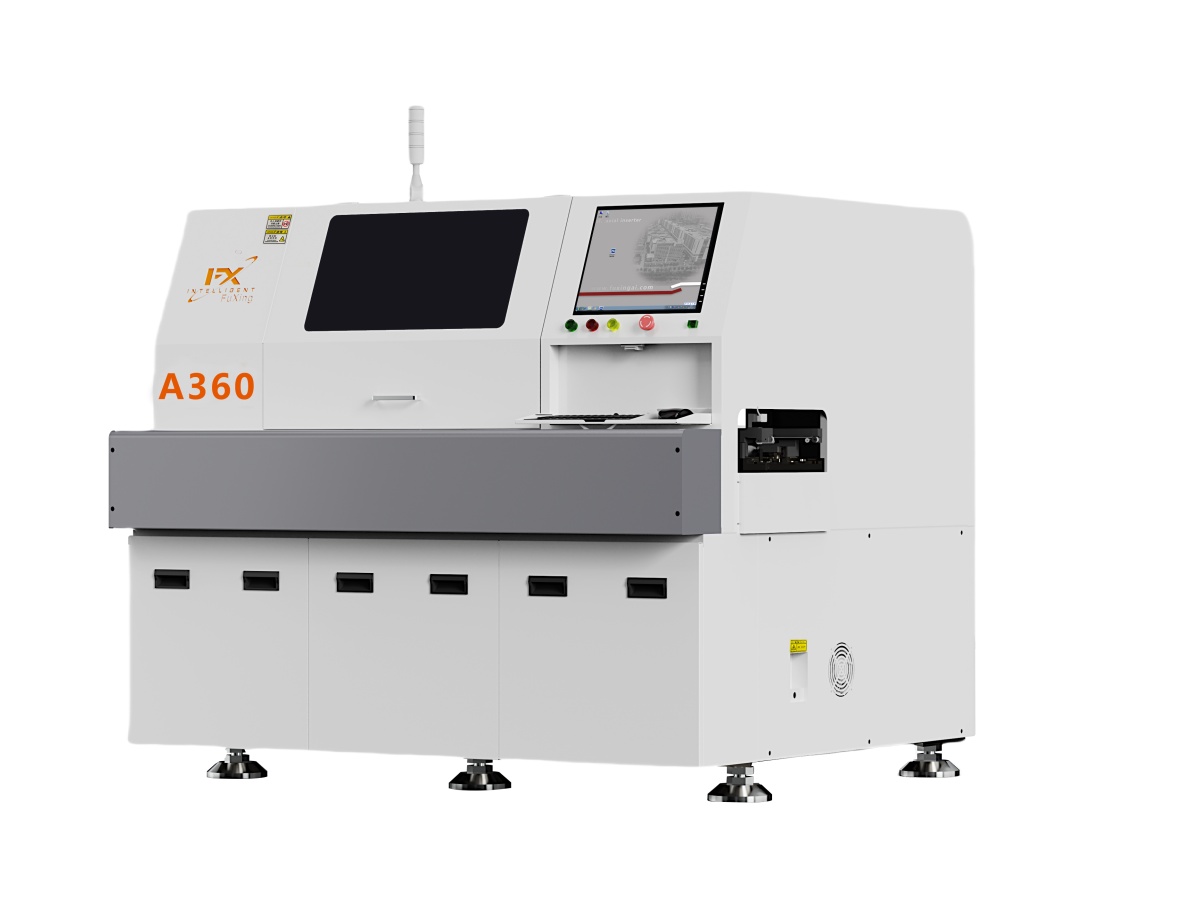
Dry-run the path first with speed turned down, and watch for anything that would collide. Only then put a board in.
Check four things on the first article: position, insertion depth, polarity, lead cut length. All four pass, and the batch can run.
If the first article fails, do not start changing parameters. Separate a program problem from a mechanical one first. A wrong coordinate is fixed in the program, a loose fixture is fixed at the fixture. Changing both at once makes it worse.
About a week to handle changeovers independently, which is the common range in the industry. The condition is being walked through one full cycle rather than guessing from a manual.
A month to clear common faults: jams, failed picks, off-position insertions. Three months to program a new board from scratch, including sequence and lift height.
What is actually difficult is not remembering the steps. It is knowing which step goes wrong. With someone guiding, it clicks. Without, people can sit stuck on Mark points for a long time.
Two Mark points on the same side. The most common one. Symptom is every board slightly skewed, worse on larger boards.
Fixture changed without recalibration. A new fixture moves the board, and the camera coordinate system has to follow. One customer ran production right after a fixture swap and scrapped a full batch.
Component height parameter not updated. The program was copied from an older board, the parts are taller, the head travel is set for the old height, and components sit above the holes without any alarm.
Commissioning includes training, 3 to 5 days, covering start-up, reel changes, program editing and common alarms, run as one complete cycle. Program storage holds tens of thousands of boards, so a repeat product is recalled rather than rebuilt.
Nearly ten thousand units in the field and over a thousand customers served. The vertical and horizontal ranges share the same program architecture, so learning one transfers quickly to the other.
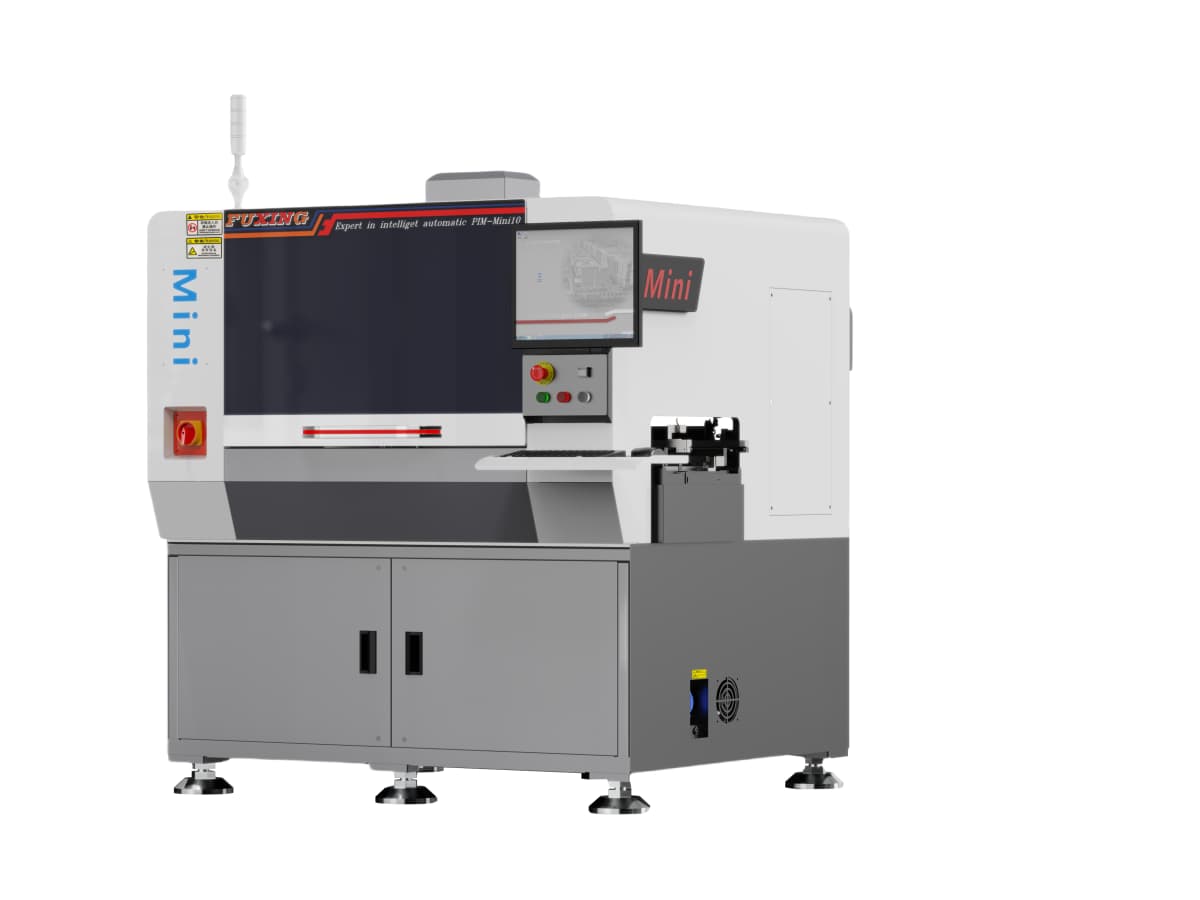
For plants with frequent changeovers and many variants, the MINI inserter cuts both program switching and fixture change time, which suits small batches better.
If you want a program built against your own board, send the coordinate file and BOM through our contact page and we will run it once for you.
Q1: Is insertion machine programming difficult?
Not difficult, but it needs someone to show you. Four things change: board origin, Mark points, insertion sequence, component parameters, all through a graphical interface. A week with guidance gets someone through changeovers; without it, people stall on Mark points and alignment.
Q2: How long does a changeover take?
Under 10 minutes with an existing program, 30 minutes to 2 hours for a new one, depending on component count and how clean the coordinate file is. Once stored, the next changeover is parameter edits only.
Q3: Can we buy an automatic inserter if nobody can program it?
Yes. Commissioning training runs 3 to 5 days and covers changeovers, program editing and common alarms. Keep it to one or two people rather than spreading it around, because scattered knowledge means nobody maintains the programs and changeovers get slower.

Copyright © 2002-2026 Shenzhen Fulxing Intelligent Equipment Co., Ltd. All rights reserved. ICP License:
Service Hotline