Welcome to Fulxing Intelligent - SMT Automation Equipment
 简体中文

Customer Service Hotline
18565526634
Welcome to Fulxing Intelligent - SMT Automation Equipment
18565526634
Contact: Mr. Yang
Mobile: 18565526634
Tel: 18565526634
Email: 1404870852@qq.com
Address: Songyu Rd 142, Songgang St, Bao'an Dist., Shenzhen, China
Buying the wrong part happens more often than paying too much.
A horizontal feeder will not mount on a vertical machine. A cutter two millimetres off makes lead length wander. The part costs little. The days spent waiting for it cost many times more.
Mounting direction. Horizontal feeders feed sideways, vertical feeders lengthwise, and the slot geometry differs. Someone pulls a feeder off an old machine, spends an hour fitting it, and finds the interface does not line up.
Pitch and tooth count. Both 12.7mm and 15mm pitch feeders exist for vertical machines. It mounts and it turns, but the feed position is off and an entire row inserts crooked.
Generation. Within one series, the feeder interface protocol may have changed between years. It mounts mechanically, and the machine will not recognize it.
Read the nameplate. Model, serial number, year of manufacture, photographed clearly. Saying "it is a vertical machine" is not enough when the same model changed between years.
Find the part number on the feeder. There is a plate or a stamped number on the side, and the part number is more reliable than the model.
Measure. Pitch, tooth count, mounting hole spacing, interface type, all four measured and photographed. This step eliminates most wrong orders.
Get written confirmation of the applicable model. A verbal "it is universal" does not count. Ask for the model and year in writing.
The price gap runs about double, which is normal in this trade. What matters is which part.
Cutters and grippers should be OEM. Both feed directly into lead length and insertion accuracy. Aftermarket edge material is one grade down. It shows nothing for two months, then dulls faster, and lead length begins to wander along with insertion depth. Nothing alarms. Yield just slides, and by the time anyone notices, a batch has shipped.
Drive belts, compression springs, filter media and quick fittings are fine aftermarket. They do not touch accuracy, they get replaced when they fail, and the saving runs about half.
Feeders can be split. Housing from an aftermarket source, gears and sensors OEM, which takes roughly thirty percent out of the cost without hurting stability.
Telling them apart: heat treatment marks on the cutting edge, clarity of the stamped part number, batch and material marking on the packaging. Vagueness in those three places usually means aftermarket.
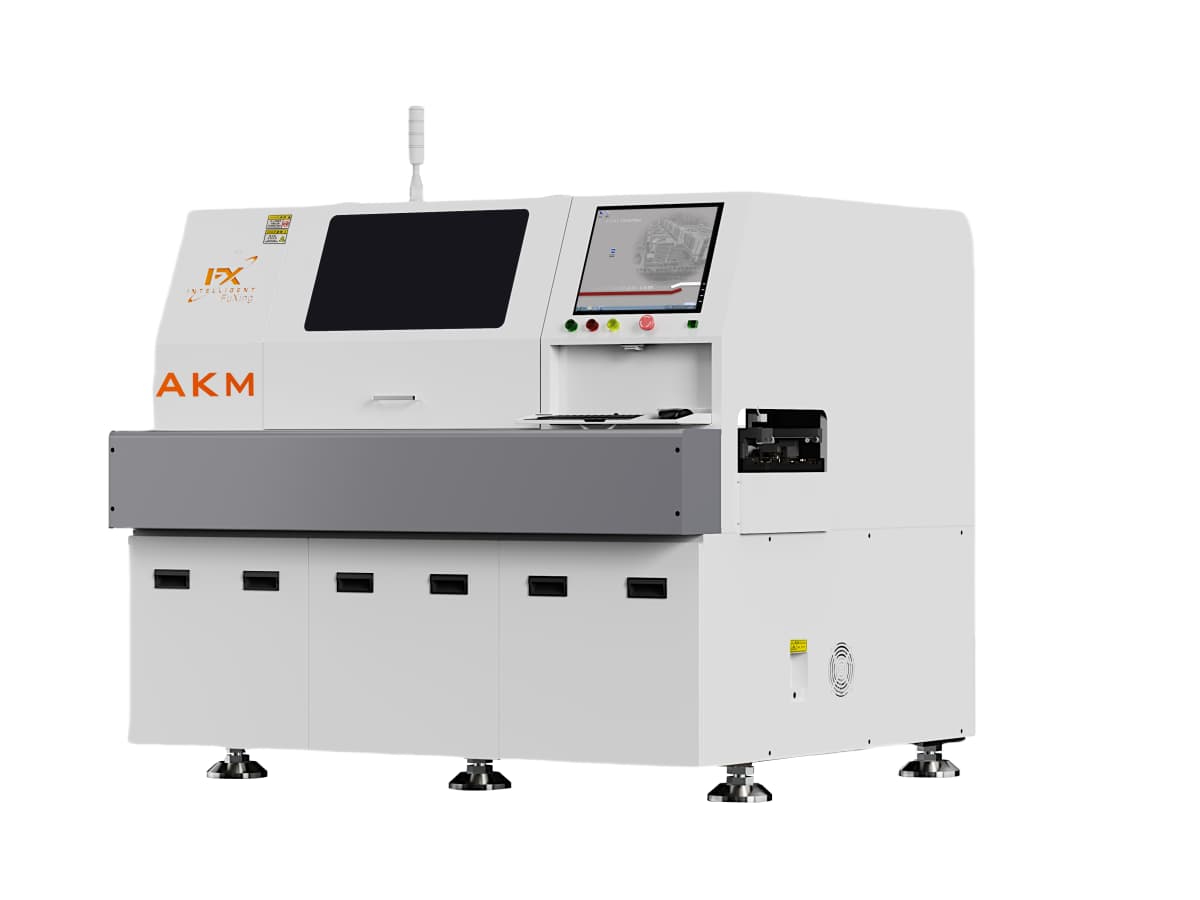
OEM only: cutters, insertion grippers, insertion heads, vision lenses, servo drives.
Aftermarket acceptable: drive belts, compression springs, quick fittings, filter media, magazine wear strips.
In between: feeders. Gears and sensors are accuracy parts, housings are structural.
A horizontal feeder on a vertical machine. It sounds basic and happens regularly in shops running both types.
Judging a cutter by length alone. Right length, wrong edge angle, and the cut face goes crooked, which bridges in wave soldering.
Running aftermarket grippers without a test. Insert a hundred points first, check position deviation, then decide.
Per machine: two feeders, one or two grippers, two cutter sets, four belts, two sensors.
Intervals and prices run roughly: cutters 3 to 6 months at 300 to 800 RMB per set; grippers 6 to 12 months at 500 to 1,500 RMB each; belts around 12 months at 80 to 200 RMB; springs 6 to 12 months at 20 to 60 RMB; missing-component sensors beyond 2 years at 200 to 600 RMB; lubricant monthly at 200 to 400 RMB.
Parts that wear by insertion count should be reviewed a month ahead. Slow-wearing items are bought once a year.
Note that the vertical and horizontal ranges do not share feeders or grippers. A shop running both stocks them by machine type, because grabbing the wrong one during a stop costs more time than the part itself.
Our spare parts section lists feeders, grippers, nozzles, cutters and sensors by machine model, with part numbers and applicable models on each page. The nameplate is usually enough to find the part.
Common parts ship within 48 hours. If a part number is unclear, send the nameplate and a photo of the old part through our contact page and we will match it before you order.
Q1: Are insertion machine parts interchangeable?
No. Horizontal and vertical feeders and grippers differ, and interfaces changed between years within a series. Check the nameplate and the feeder part number before ordering.
Q2: Can aftermarket parts be used?
Depends on the part. Belts, springs and filter media are fine. Cutters, grippers, insertion heads and lenses should be OEM, because aftermarket wear is faster and yield erodes without warning.
Q3: How many spare parts should a shop stock?
Work per machine: one set of common parts, plus an extra of the two fastest-wearing items. Shops running both machine types must store them separately, since numbers and specifications differ.

Copyright © 2002-2026 Shenzhen Fulxing Intelligent Equipment Co., Ltd. All rights reserved. ICP License:
Service Hotline