Welcome to Fulxing Intelligent - SMT Automation Equipment
 简体中文

Customer Service Hotline
18565526634
Welcome to Fulxing Intelligent - SMT Automation Equipment
18565526634
Contact: Mr. Yang
Mobile: 18565526634
Tel: 18565526634
Email: 1404870852@qq.com
Address: Songyu Rd 142, Songgang St, Bao'an Dist., Shenzhen, China
A vertical insertion machine handles only the taped layer on a fridge control board. But fridge boards carry a constraint other appliance boards do not: insertion is not the last step. Conformal coating and potting come after, and both push back on how insertion is sequenced, how tall components can be, and when connectors go in.
Plenty of plants buy a machine looking only at the insertion stage, then discover at coating and potting time that the sequence does not run, components exceed the height limit, and connectors end up sealed in resin. This is about that coupling.
Washing machine and air conditioner main boards mix power and logic, but the components are conventional. A fridge adds a variable frequency drive.
The compressor is inverter-driven through an IPM power module, surrounded by a large inductor, current-sense resistors and a bus capacitor. These are wide-span, thick-leaded, weighty parts that no standard gripper takes.
The control side carries four NTC sensor inputs for the fridge, freezer, ambient and defrost circuits, plus fan, lamp and door switch. That is where taped parts cluster.
Fridge boards also live in a cold, damp environment, with condensation near the fresh food compartment year round, so the whole board needs protection. That is what brings in coating and potting.
Walk the board and the split is clear.
Machine-capable: resistors, capacitors, diodes, transistors, optocouplers, small electrolytics, the taped layer. On a hundred-point board that is fifty to sixty points.
Not machine-capable: the IPM module, large inductors, bus capacitors, connectors and terminal blocks. Each exceeds span or weight, or needs a press.
So a vertical inserter has a defined role: small parts. Large parts stay manual or go to an odd-form machine, the same logic as any appliance board.
The difference is what comes after.
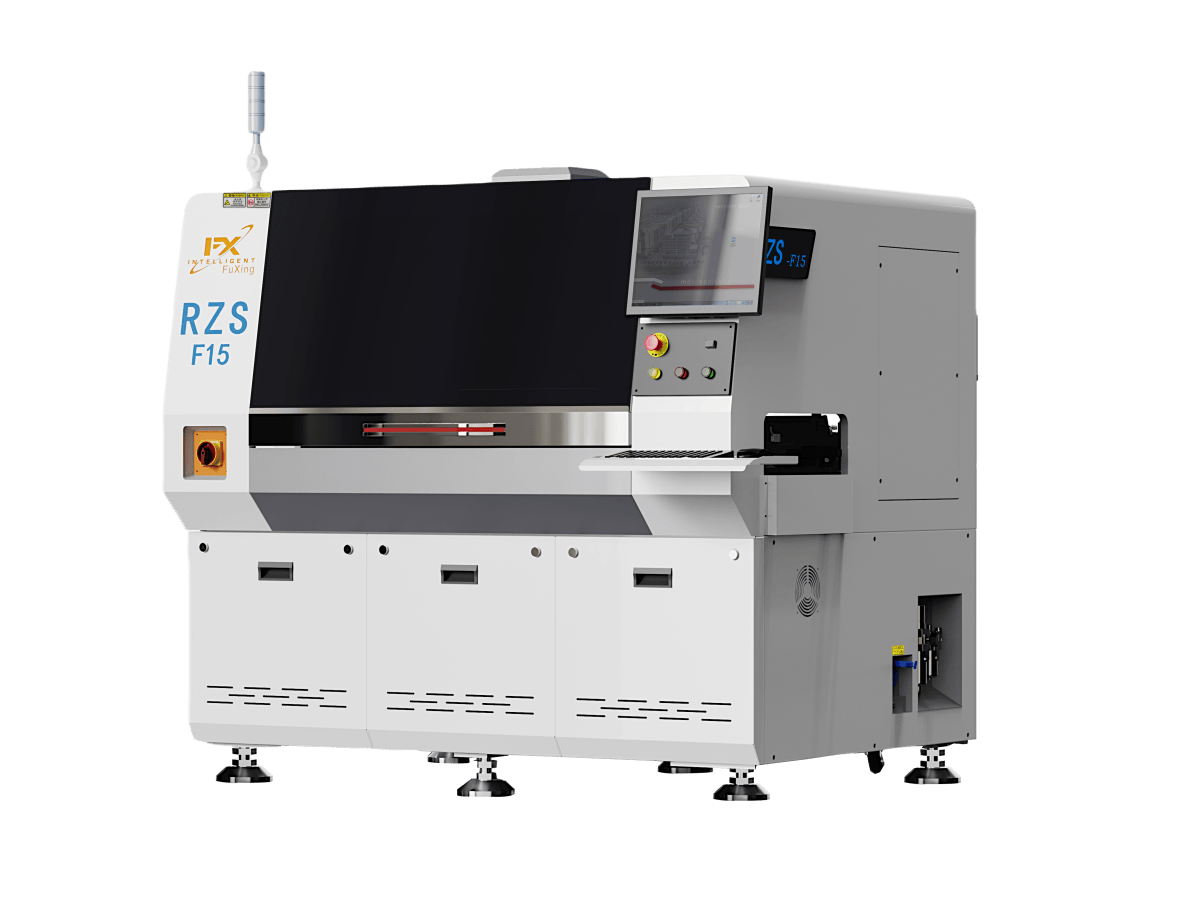
Conformal coating requirements are blunt: connectors, sockets, switches and heatsink surfaces must carry no coating, and have to be masked with peelable solder mask or fixtures.
Dry film thickness is typically 25 to 75 microns, or 0.1 to 0.3mm when brushed. The coating must cover the board and pads completely without entering connector cavities.
That is where the trouble starts. If every connector is inserted before coating, masking means taping and peeling one at a time, doubling the labour, and any gap in the tape lets coating seep into the cavity. Coating on the pins means poor contact, and the board goes to rework.
Leave connectors until after coating and insertion splits into two passes: taped parts and unmasked components first, then coating and curing, then connectors. Between the passes the boards need transport and storage, an extra material handling step.
Both approaches are used, and connector count decides. Three or four connectors per board, insert everything then mask. More than six or seven, split into two passes.
Some fridge boards pot the inverter area locally, solving heat and moisture together.
The process runs: fit a dam or housing, mix two-part resin, vacuum de-gas, pour slowly so resin fills under components and into gaps.
There is a hard constraint. The resin surface sits close to the dam height. A component taller than the dam ends up above the resin line with protection compromised. A component pressed against the dam wall stops resin flowing in, leaving a void.
So before insertion, what goes inside the potted area and how tall it may be has to be fixed with the mechanical design. On the machine side, the question is head lift height. Taller components need more lift, and insufficient lift means the head strikes parts already inserted.
This is the easiest thing to miss at trial. Run a board with no tall parts and the machine looks fine. Add the relay and electrolytic and the lift problem surfaces.
Pick according to the board.
First, insert everything then coat. Suits boards with few connectors and a small potted area. One insertion pass, highest efficiency, masking and peeling remain manageable.
Second, split into two passes. Taped parts and potted-area components first, coating and curing, then connectors and exposed parts. Suits boards with many connectors, or connectors that solvents attack.
Third, pot first, insert later. Only viable where the potted area is self-contained and off to one side. Cure the resin, then insert the peripheral parts. Requires the potted area not to interfere with rail clamping.
Whichever you choose, the program has to mark the potted and masked zones. Some vertical machines support zone-based insertion lockout, where a keep-out region stops the head entering, which is genuinely useful on multi-stage boards.
Beyond cycle time and accuracy, three questions matter on fridge boards.
One, maximum head lift height, and whether lift can be set per component height. The tallest part on the board sets this number.
Two, rail clamping force. Fridge main boards reach 200mm in length, and a heavy panel on a marginal clamp shifts slightly during insertion, accumulating a fraction of a millimetre of drift over dozens of points.
Three, program zoning. Whether the software can define keep-out areas decides whether the multi-stage sequences are even possible.
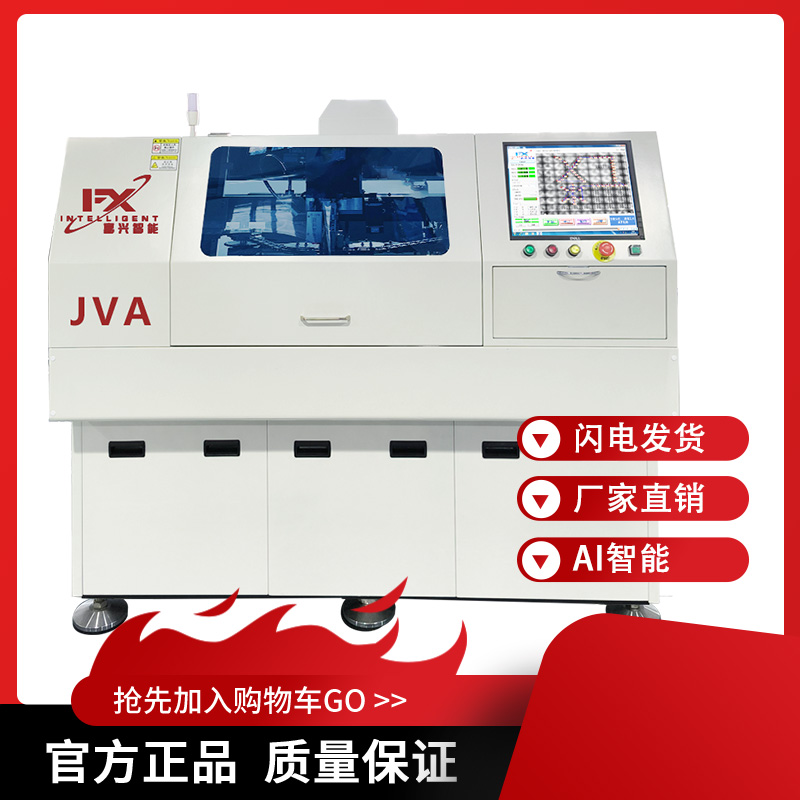
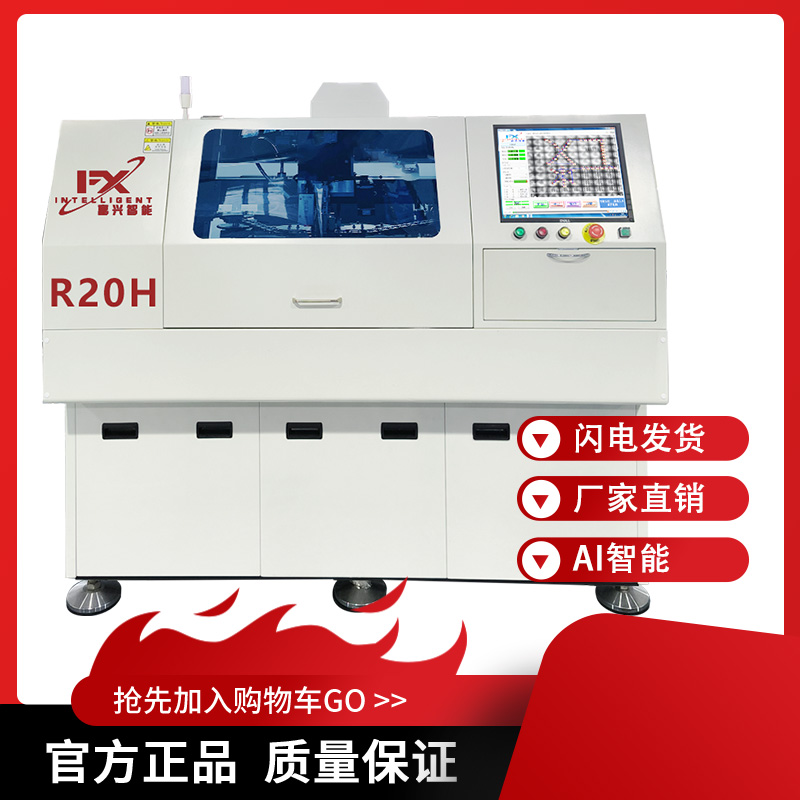
The published figures for the vertical range are 0.16 to 0.2 seconds per point, 20,000 points an hour, 0.01mm accuracy and a 0.3 percent defect rate, all adequate here. What deserves attention is lift height and zoning. Spare parts stocking follows the machine mix: grippers and cutters separated by type, because mixing them is how the wrong part gets fitted in a hurry.
Q1: Can the machine insert everything and let coating go on without masking?
No. Coating in connector cavities is one of the most common rework causes: pins get film-wrapped and lose contact after a few insertions. Masking cannot be eliminated, only reduced, by grouping connectors together or specifying connectors with a coating barrier.
Q2: Can components inside the potted area still be machine-inserted?
Yes, subject to two checks: component height under the dam, and sufficient head lift. Note that potting fixes components in place, so a reversed polarity costs a digging-out operation to repair. First articles in the potted area should always get a manual polarity check.
Q3: Can one vertical machine run both fridge and washing machine boards?
It can, but keep programs and fixtures separate. The large-component mix differs, with the fridge board adding an IPM and large inductors, and the keep-out zones sit in different places. Merge the programs and a changeover can put a zone in the wrong spot and drive the head into a tall part.

Copyright © 2002-2026 Shenzhen Fulxing Intelligent Equipment Co., Ltd. All rights reserved. ICP License:
Service Hotline