Welcome to Fulxing Intelligent - SMT Automation Equipment
 简体中文

Customer Service Hotline
18565526634
Welcome to Fulxing Intelligent - SMT Automation Equipment
18565526634
Contact: Mr. Yang
Mobile: 18565526634
Tel: 18565526634
Email: 1404870852@qq.com
Address: Songyu Rd 142, Songgang St, Bao'an Dist., Shenzhen, China
Installation timing for an insertion machine depends heavily on whether it is a standard or a custom build.
Standard models run 15 to 20 working days from order to production. Custom builds depend on how non-standard they are, 25 to 40 working days. Once the machine arrives, installation and commissioning take one to two days and training another one to two, so three to five days before the line runs.
Many projects stall here, and not because of the equipment.
Floor space. The machine body covers about two square metres. Add infeed and outfeed conveyors, material staging and room for an operator, and the real footprint is three to four square metres. On an upper storey, confirm floor loading first.
Power. Typically 1.2 to 2 kW on a dedicated circuit with proper grounding. If the line shares a circuit with other equipment, voltage sag during insertion shows up as accuracy drift.
Air. A stable 0.5 to 0.6MPa supply. This is the one most often missed. Unstable pressure makes insertion force wander, and shallow or angled insertions trace straight back to it.
Network. Only needed for MES integration, but run the port to the machine position beforehand rather than pulling cable after commissioning.
With any of these missing, the engineer arrives and waits.
First, unpacking inspection. Check for shipping damage, verify the accessory list, confirm manuals, certificate and spare parts kit. Do it on the spot, because afterwards nothing is provable.
Second, positioning and levelling. Move the machine into place, adjust the feet, check with a level. An unlevel floor causes resonance once running, and accuracy will not hold.
Third, power and air. Confirm phase sequence before switching on, then connect air and read the gauge. Reversed phase runs motors backwards. Some models protect against it, some do not. Press the emergency stop once before power-up to confirm it actually cuts power, which sounds redundant until the day it matters.
Fourth, dry run. Home every axis, cycle each motion manually, listen for noise and watch for binding. No material in this step, purely mechanical.
Fifth, test-insert real boards. Use the customer's own boards, not the demo board the supplier brings. This step gets its own section below.
Sixth, training handover. Start-up, reel changes, program editing, common alarms. One to two days.
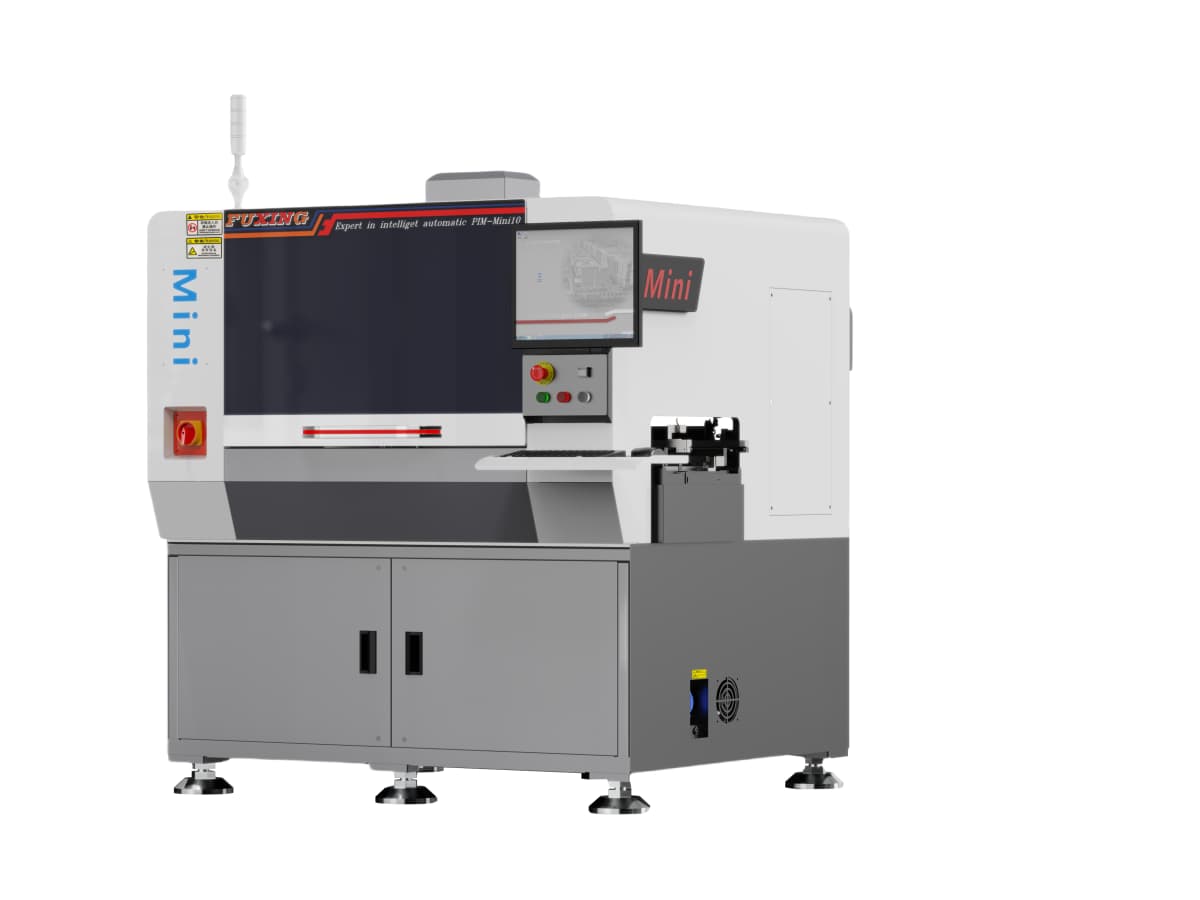
A supplier's demo board is tuned, and anything inserts cleanly on it. Your own board is the only honest test.
Watch three figures. Repeat positioning accuracy, 0.01mm on mainstream models. Cycle time, measured on your board's actual components. Defect rate, which should land under 0.3 percent with vision inspection.
Sign only when all three meet the contract. If they do not, raise it on the spot and have the supplier adjust until they do. After signing, it becomes a commercial conversation rather than a technical one.
One to two days, four modules: start-up and shutdown, reel and feeder changes, program recall and simple edits, common alarms.
Have one or two people learn it rather than the whole shift. Scattered knowledge means nobody maintains the programs, and every changeover ends in a phone call to the supplier.
The learning curve runs roughly: half a day to start up and change reels, a week to run changeovers independently, a month to program a new board.
Selling the machine is where service begins.
The standard commitment is remote response within 24 hours, with most alarms resolved that way. Where an engineer is needed, three working days to site. Common spares ship within 48 hours.
Put all three into the contract rather than accepting them verbally. A day of downtime usually costs more than a year of maintenance.
Both the vertical and odd-form ranges are installed on site, test-inserted with your own boards, and checked against the three figures on the spot. Training runs one to two days, with the fault-handling handbook handed over at commissioning.
Nearly ten thousand units in the field and over a thousand customers served, with nationwide installation and faster response in Guangdong and surrounding provinces.
If you are preparing to install, send your board specifications and site conditions through our contact page and we will list the four preparation items for you, so nobody waits on the day.
Q1: How long from order to production?
Standard models 15 to 20 working days, custom builds 25 to 40. On site, installation and training together take three to five days before normal production.
Q2: What has to be prepared before installation?
Three to four square metres of floor with confirmed loading, a dedicated power circuit with grounding, a stable air supply at 0.5 to 0.6MPa, and a network port if MES integration is planned. Missing any one delays commissioning.
Q3: What should we check during the test run?
Use your own production boards, not a demo board. Check three figures: repeat positioning accuracy, insertion rate per unit time, first-pass yield. Sign only when they meet the contract, and have the supplier adjust on the spot if they do not.

Copyright © 2002-2026 Shenzhen Fulxing Intelligent Equipment Co., Ltd. All rights reserved. ICP License:
Service Hotline