Welcome to Fulxing Intelligent - SMT Automation Equipment
 简体中文

Customer Service Hotline
18565526634
Welcome to Fulxing Intelligent - SMT Automation Equipment
18565526634
Contact: Mr. Yang
Mobile: 18565526634
Tel: 18565526634
Email: 1404870852@qq.com
Address: Songyu Rd 142, Songgang St, Bao'an Dist., Shenzhen, China
Whether an automatic insertion machine pays off is easy to settle on a water purifier board. The whole board carries thirty to fifty points, which sounds modest, but half of those holes sit in connectors for the inlet valve, flush valve, booster pump, TDS probe, pressure sensor, flow meter, leak detector and water level. Connectors cannot be machine-inserted; they are pressed by hand. So the payback calculation has to run on the remaining half, not the whole board. That is where most buyers get it wrong.
Start with the component mix. The core is a 32-bit MCU running at 3.3V, surrounded by sensor interfaces: a TDS probe outputting 0 to 2V analogue, a pressure sensor at 0 to 1MPa over I2C, a Hall-effect flow meter giving pulses, plus leak and level detection.
On the output side sit the inlet valve, flush valve and booster pump, all 12V or 24V DC. Solenoids draw under 5W, the booster pump 30 to 60W, driven through relays or MOSFETs. Relay coils are 12V with 250V/2A contacts.
The supply section turns 220V into 12V at 2A, then steps down to 5V and 3.3V.
Plenty of components, but what actually lands on the board and needs inserting is the connector bodies themselves. J1 at two pins, J4 at six, J8 at two. Six to ten connectors per board is ordinary.
A two-pin connector occupies two holes, a six-pin one takes six. Six connectors come to twenty-odd holes, half the board.
What are the taped parts on this board? A few resistors, a few capacitors, one or two diodes, a transistor, plus a relay and an electrolytic. Fifteen to twenty-five points in total.
In other words, the machine-capable portion is smaller than the portion it cannot touch. That inverts the logic of an air conditioner board or a small appliance board, where taped parts are seventy percent of a hundred-plus points and one vertical machine absorbs most of the work.
It is not an accuracy problem, it is geometry.
These wire-to-board connectors have flat or square pins at 2.0mm or 2.54mm pitch, with retention latches on both sides. Insertion means aligning every pin to its hole first, then pressing straight down. Under-press and the contact is unreliable; over-press and the latch breaks.
Automating that needs a gripper built for the specific connector, or a dedicated press fixture. A plant running seven or eight purifier models a year rarely uses the same connector across all of them, so the tooling never amortises.
So the work stays manual, with a locating fixture holding the board while an operator presses connectors in sequence. Not fast, but consistent. Some shops use a pneumatic press, one connector per stroke, which holds up better than hand pressure but needs a new fixture per model.
Split the calculation in two.
The machine-capable part, say 20 points at 2,000 boards a day, comes to 40,000 points daily. At 0.18 seconds per point and 70 percent utilisation, a vertical machine delivers 14,000 points an hour, so three hours covers it. One machine does three hours of work and has five left for other products.
The manual part: six connectors plus a large electrolytic and a relay, call it two minutes per board. At 2,000 boards that is 4,000 minutes, about 67 hours, or 33 hours per operator across two people. The gap is obvious.
The conclusion is blunt: the bottleneck is at the manual stations, not at insertion. Buy an automatic insertion machine and the insertion speed gains nothing, because connectors still pile up.
So the decision is not about insertion hours. It is about whether the manual stations can be staffed. If they can, a machine saves a few operators. If they cannot, a machine only moves the queue to the connector step.
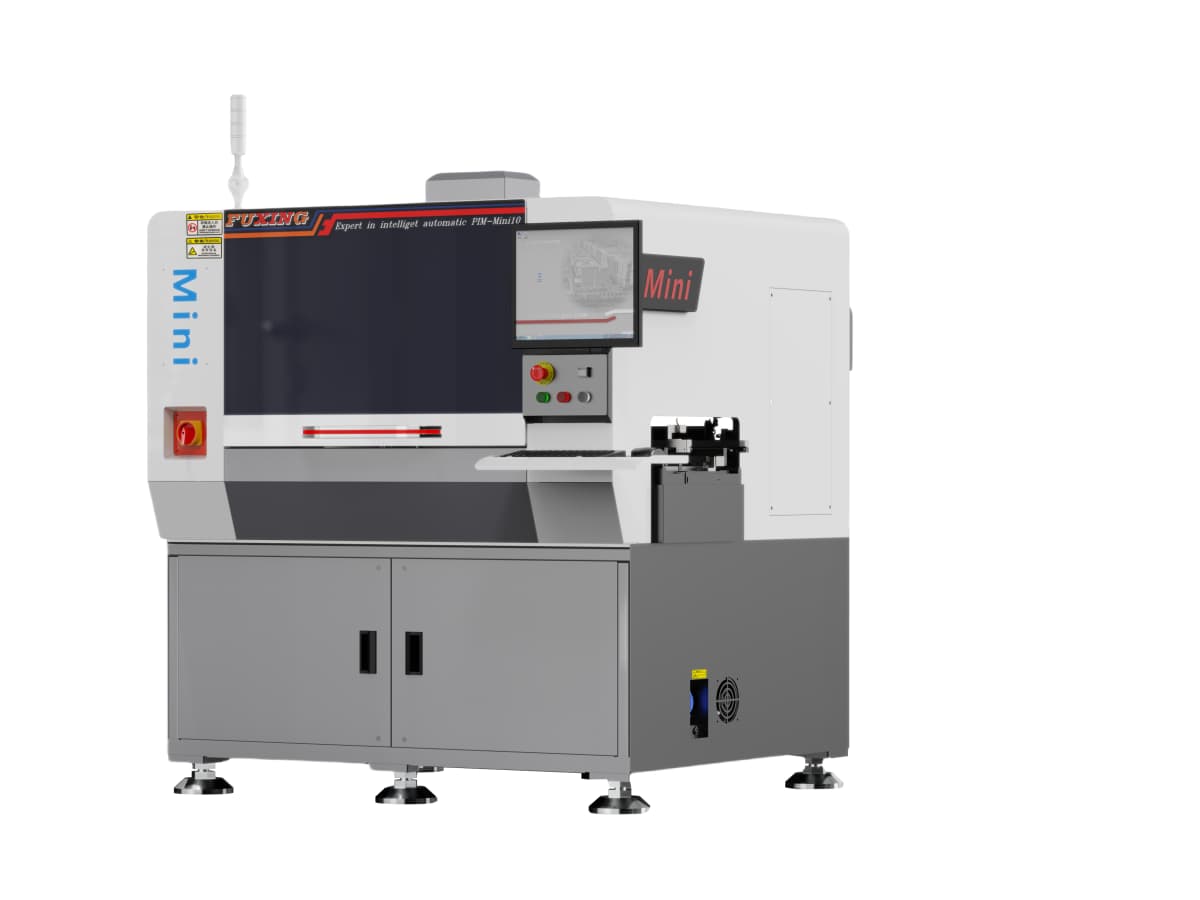
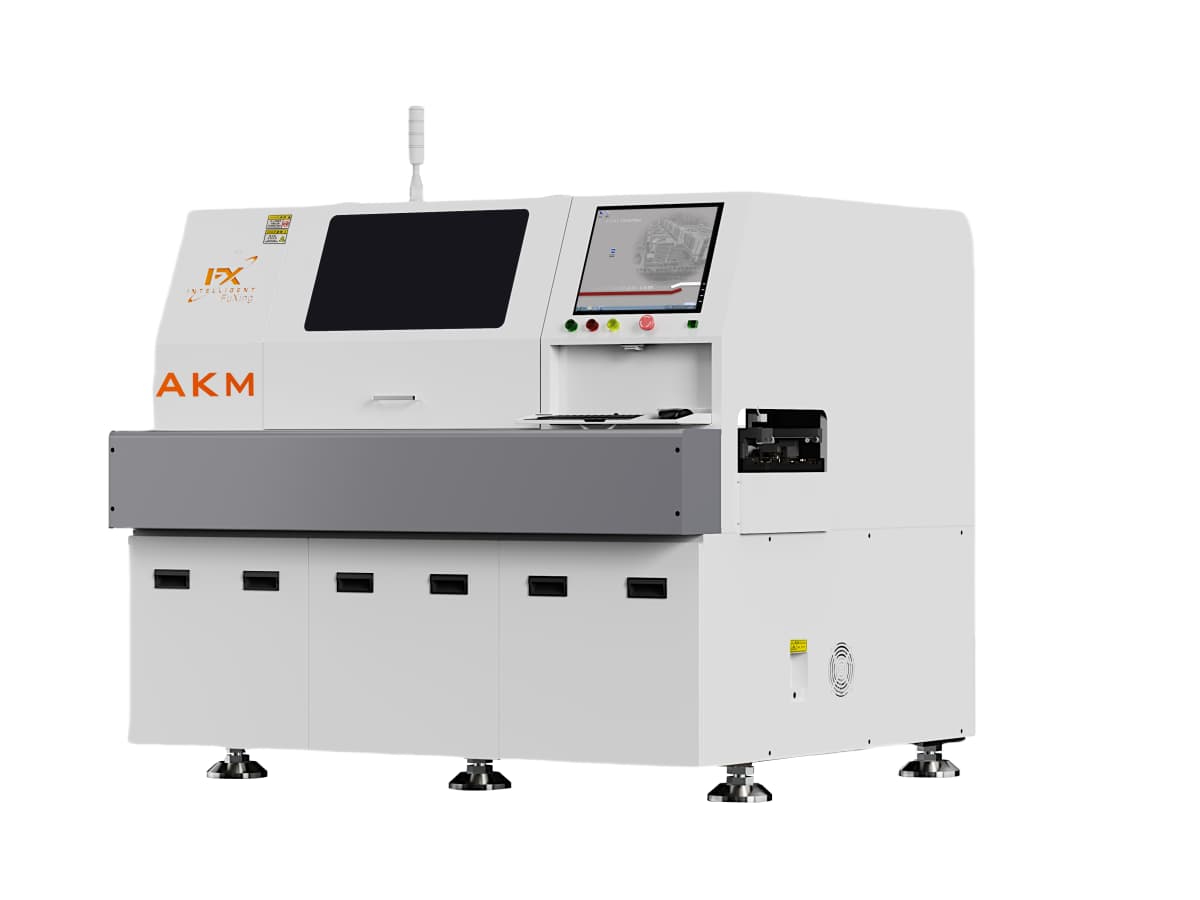
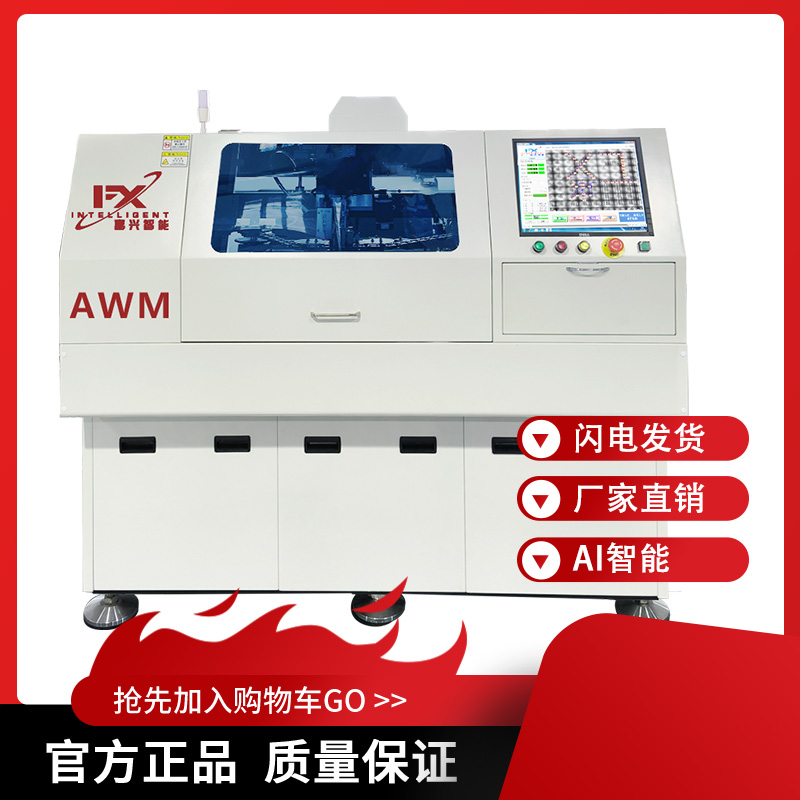
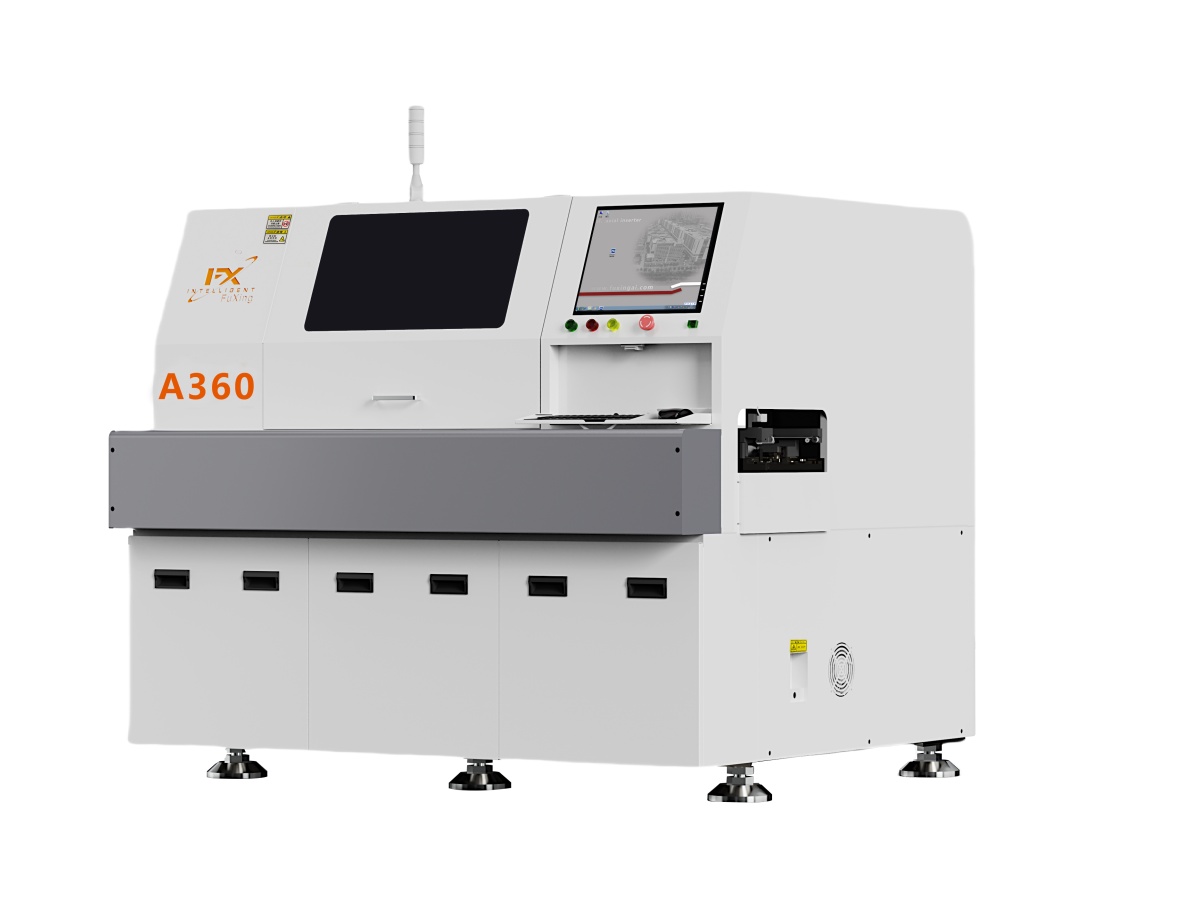
If you do buy, favour a small model. A MINI inserter covering two square metres and built for small boards and small batches matches a purifier board better than a standard vertical machine, which will clamp a thirty-point board at the end of its rail travel and waste the stroke.
Three situations.
First, connector standardisation. Reduce the interfaces to one or two types and custom grippers become one or two sets, which amortise across annual volume. Then the machine can insert connectors too.
Second, volume. Above five thousand boards a day, manual stations cannot keep up no matter how many you add, and insertion becomes the constraint in both directions.
Third, a design change. Move connectors to SMD or onto a harness, and what remains on the board is taped parts plus a few large components. That is where a machine shows its value immediately.
Absent all three, the money is better spent on fixtures and stations than on equipment.
If the decision is yes, three questions matter more than the usual parameter sheet.
One, minimum rail width. Purifier boards commonly run 80mm to 120mm wide, and some machines bottom out at 100mm, so narrower boards need panelising.
Two, gripper options and opening size. The electrolytic and relay on the board determine whether large parts can run at all.
Three, program storage. Purifier models are numerous with medium batch sizes, so changeovers are frequent. A machine that stores programs lets you call one up in ten minutes; one that does not means re-teaching every time.
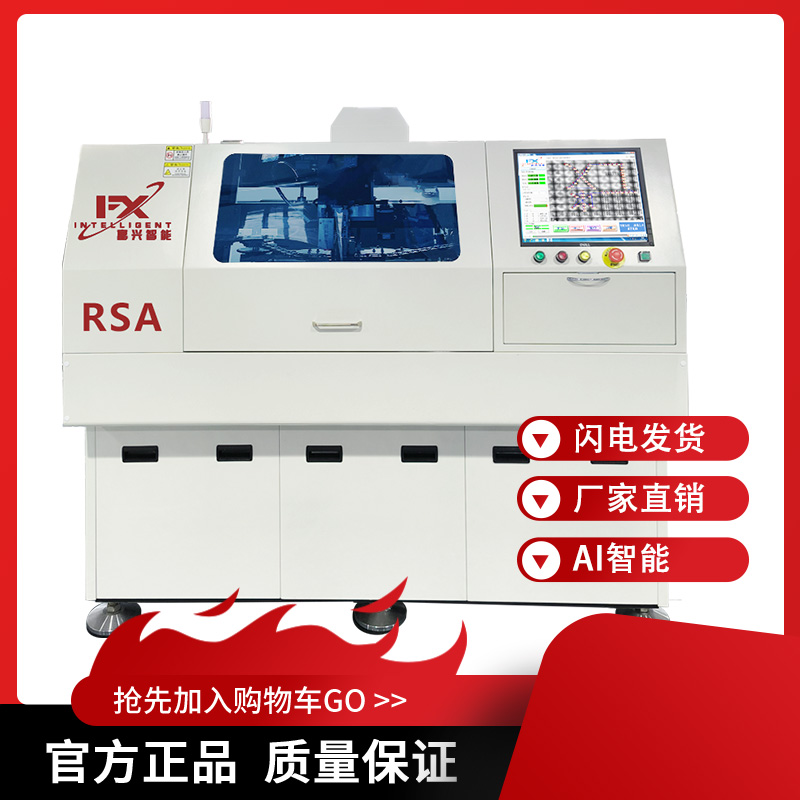
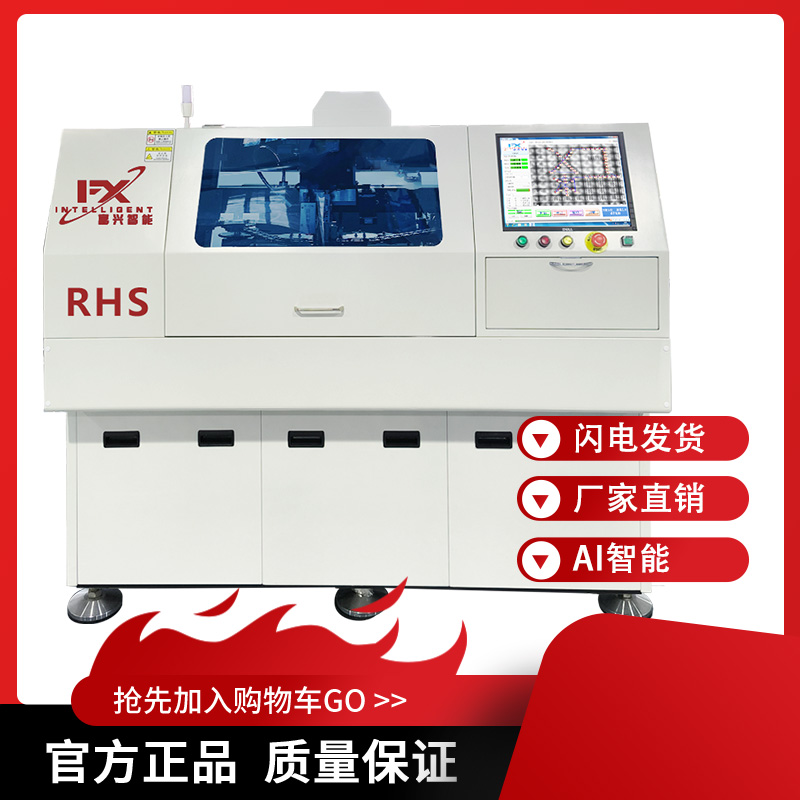
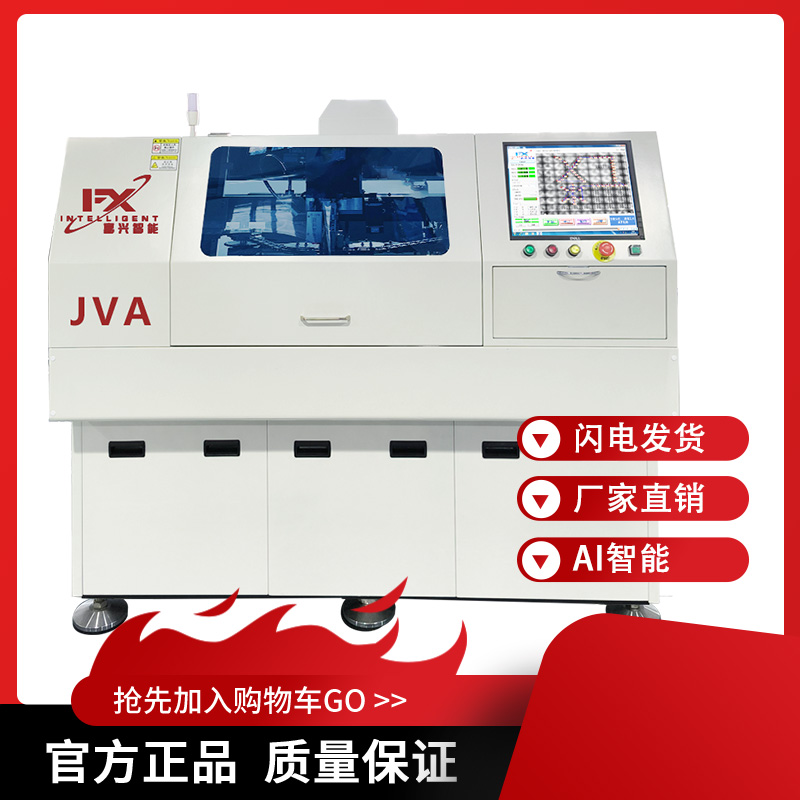
The published figures for the vertical range here are 0.16 to 0.2 seconds per point, 20,000 points an hour, 0.01mm accuracy, none of which is the limit on a board this size. Rail width and changeover speed are what actually decide it. The same applies to spare parts: stock by machine type, because mixing grippers and cutters is how the wrong one gets fitted during a stop.
Q1: With so few points, is a manual line enough?
That is what most plants do. Manual stations plus fixtures, two or three operators, and 2,000 boards a day is achievable. Add a vertical inserter once volume doubles or connectors are standardised, and the machine will not sit idle.
Q2: Can the connectors become SMD and skip insertion entirely?
They can, and new designs increasingly do. But a wire-to-board connector has to survive insertion and withdrawal plus harness pull, and SMD joints are usually weaker mechanically than through-hole. A purifier lives under a kitchen counter and gets serviced regularly, so that trade-off matters.
Q3: Can purifier and water dispenser boards share one machine?
Look at the point mix. A dispenser board carries heating control, so relays and triacs are larger and connectors fewer. Both can run taped parts on the same vertical machine, but keep programs and fixtures separate rather than mixing them into one set.

Copyright © 2002-2026 Shenzhen Fulxing Intelligent Equipment Co., Ltd. All rights reserved. ICP License:
Service Hotline