Welcome to Fulxing Intelligent - SMT Automation Equipment
 简体中文

Customer Service Hotline
18565526634
Welcome to Fulxing Intelligent - SMT Automation Equipment
18565526634
Contact: Mr. Yang
Mobile: 18565526634
Tel: 18565526634
Email: 1404870852@qq.com
Address: Songyu Rd 142, Songgang St, Bao'an Dist., Shenzhen, China
The most common mistake with washing machine control board insertion machines is treating the two boards as one job. Every machine has a main control board and a display board, usually built by the same plant. Their component mixes differ sharply, and no single machine serves both. Configure for the main board and the display board will not clamp; configure for the display board and none of the main board's large parts fit.
The main board mixes power and logic. The supply section carries a transformer, bridge rectifier and bulk filter capacitor. The output section carries triacs or relays driving the inlet valve, drain pump and motor. The interface section carries the water level sensor header, motor connector and fuse holder. Only then come the rows of resistors, capacitors and diodes. A main board typically runs 80 to 150 points.
The display board is simpler: keys or touch springs, a seven-segment or segment LCD, a few LEDs, a buzzer, and one ribbon header back to the main board. Thirty to sixty points, often half the footprint or less.
That difference dictates the configuration.
What a machine can insert on the main board is the taped layer: resistors, diodes, ceramic capacitors, small electrolytics. That is a healthy share, sixty or seventy points on a hundred-point board.
Three groups it cannot take. Transformers and bridge rectifiers are large parts whose span and weight may exceed the limits. Relays and triacs have thick leads at irregular pitch and need polarity control. Connectors and terminal blocks are odd-form parts needing high insertion force.
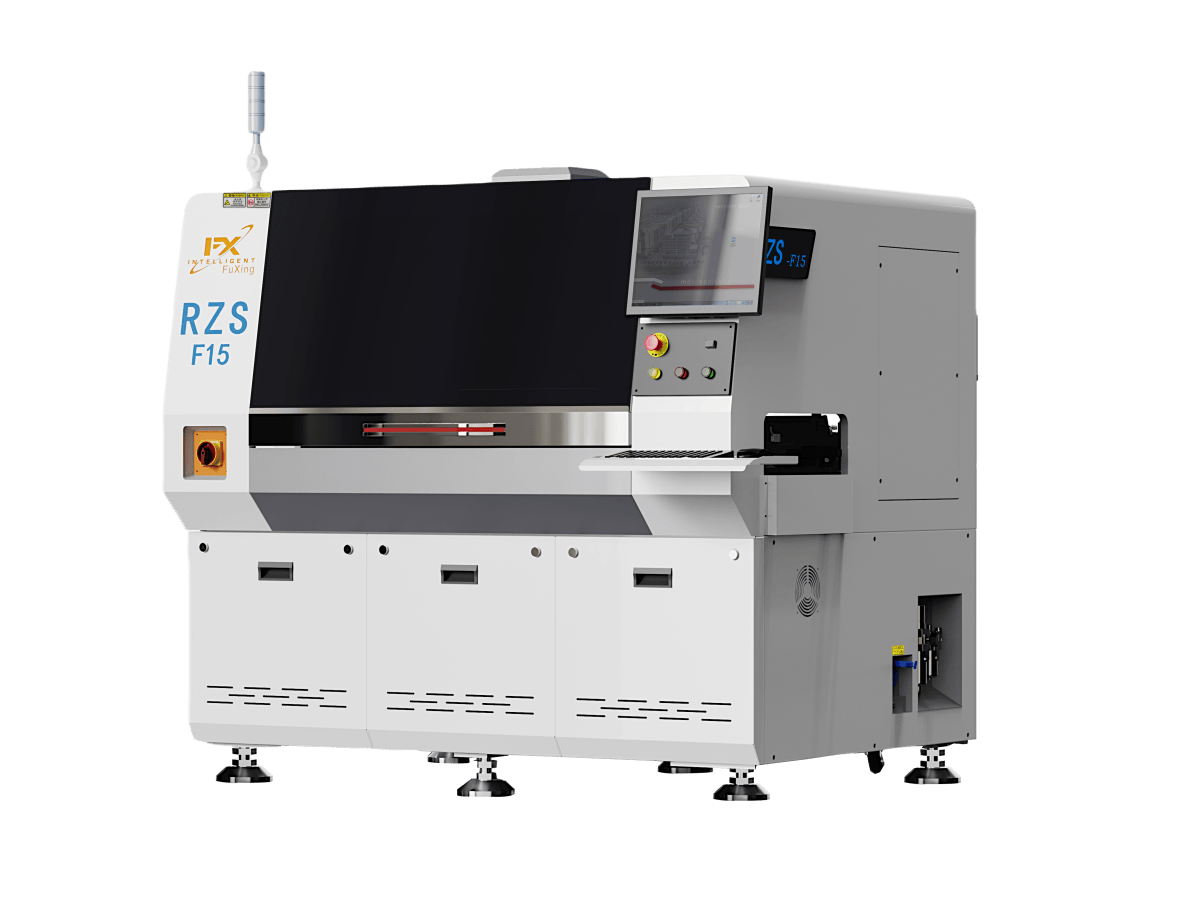
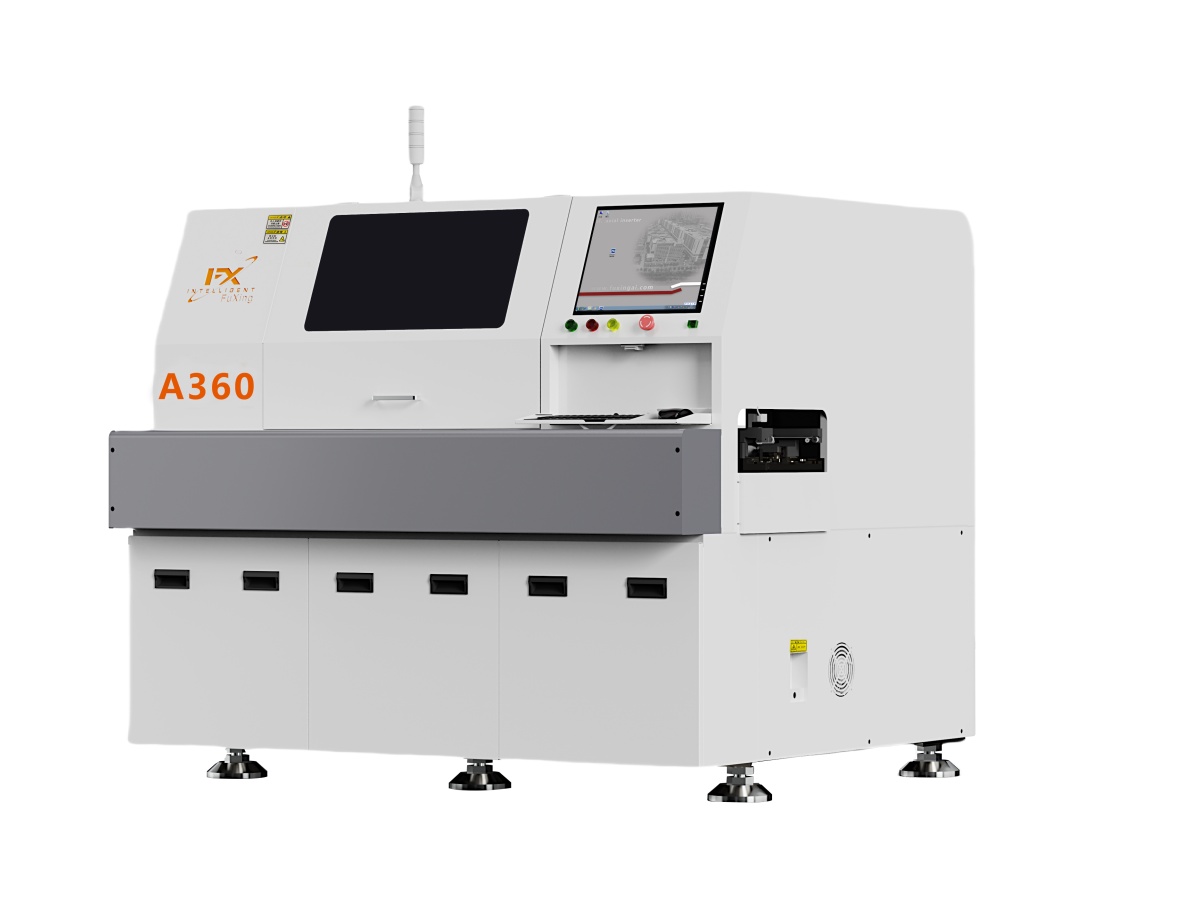
So the realistic layout is one vertical inserter on the taped layer, the rest manual or partly on an odd-form machine. At 0.18 seconds per point and 70 percent utilisation a vertical machine delivers 14,000 points an hour, so 3,000 hundred-point boards a day needs fourteen to fifteen hours, two shifts.
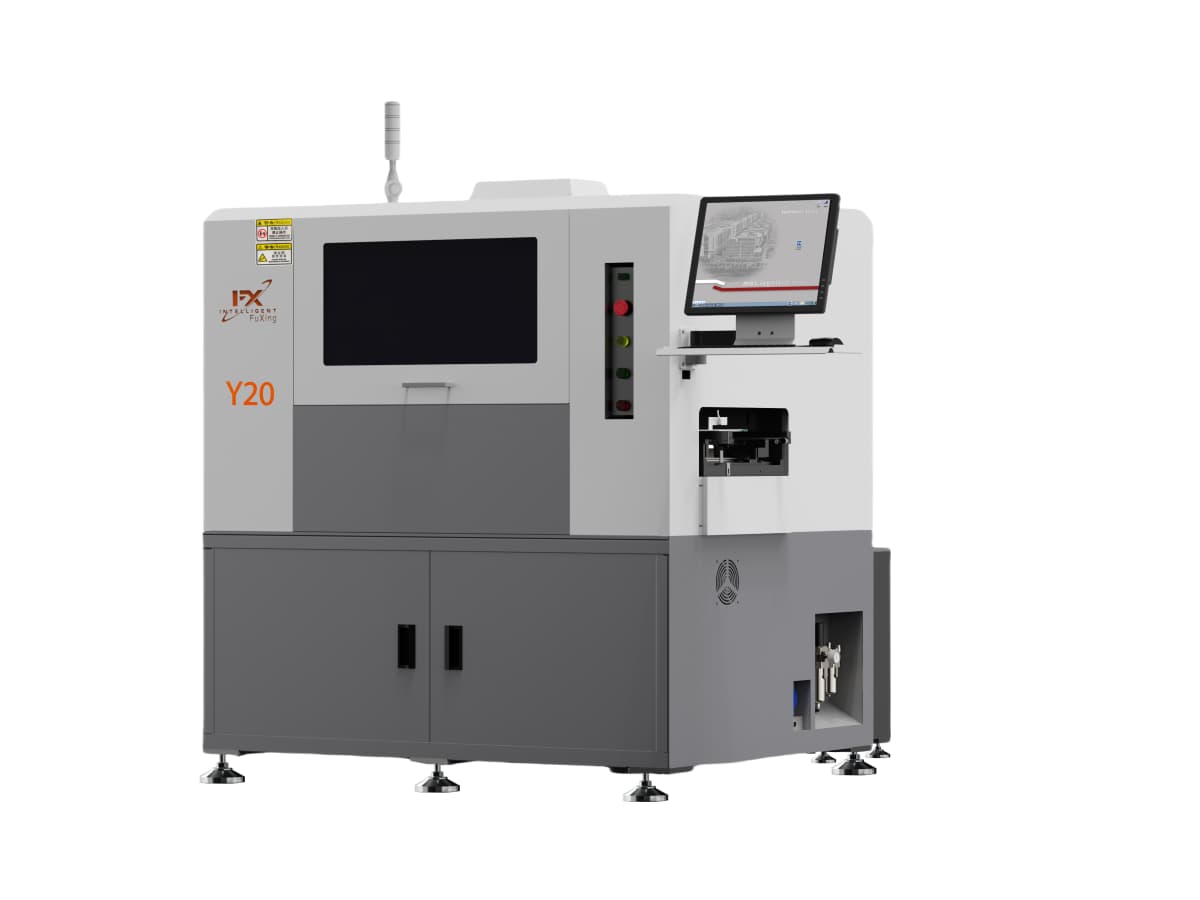
The question is not whether the machine can insert, but whether it is worth it.
A display board runs forty or fifty points on a small panel. Vertical machines have a minimum rail width, commonly 50mm, and anything narrower will not clamp, so the board has to be panelised. Panelising works, but depanelling adds a process step and scrap rises with it.
Cycle time is the bigger problem. Forty or fifty points insert in under ten seconds, and loading, locating and unloading take longer than the insertion itself. Labour is saved; equipment utilisation looks poor.
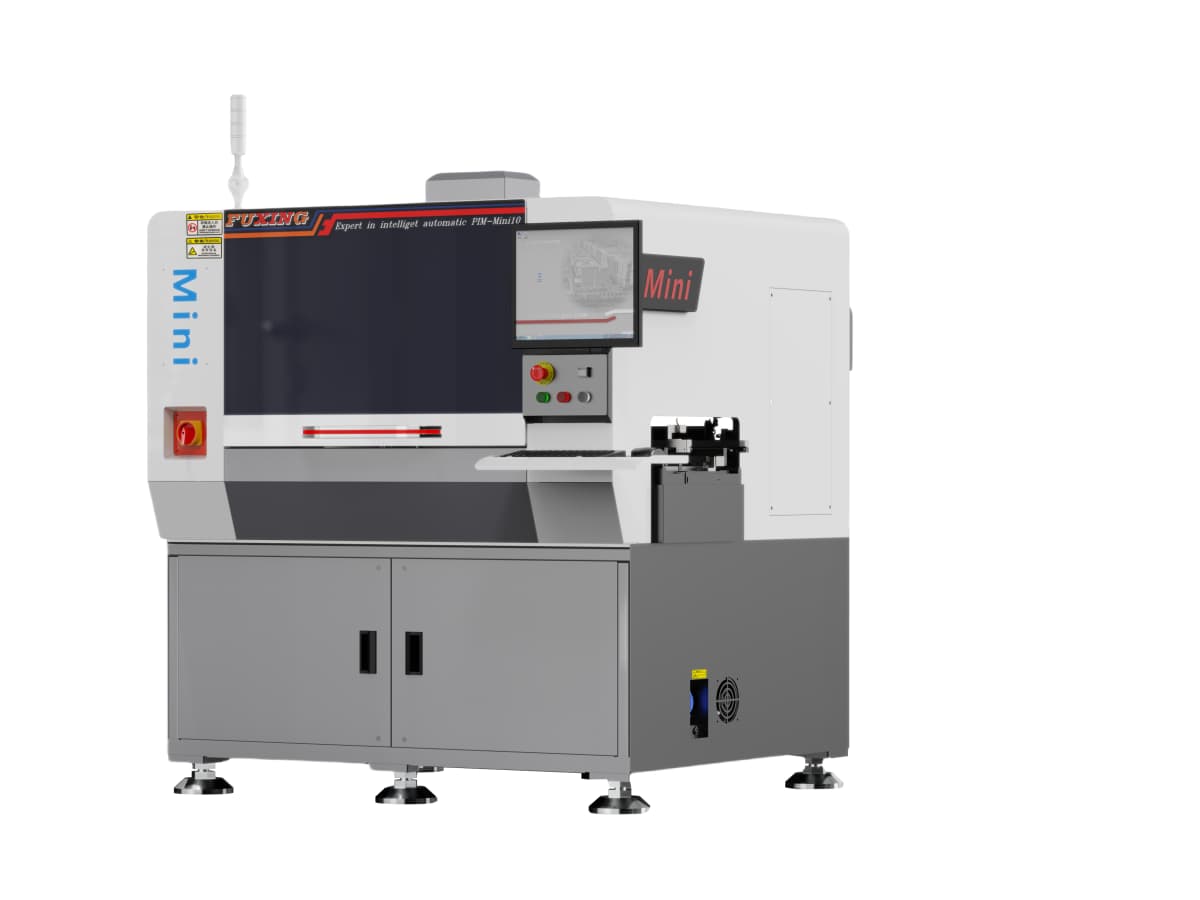
In practice most shops keep display boards manual, with a MINI inserter and two or three operators covering several thousand boards a day. A few panelise so a dozen small boards pass through in one cycle, which does pay, provided volume is steady and models are few.
The boards connect through a ribbon cable using 2P to 6P wire-to-board headers, commonly at 7.5mm or 2.54mm pitch. The leads are flat or square, and the housing is retained by side latches, so insertion means aligning first and pressing fully home. Under-press and contact is poor; over-press and the latch breaks.
Automating that needs either a custom gripper or a dedicated press fixture. Custom grippers are built per header, and where washing machine models change several times a year the cost never amortises.
So these parts stay manual, pressed with a locating fixture. It is not fast, but it is consistent. Some shops use a pneumatic press, one part per stroke, which holds up better than hand pressure.
Both boards ship in a 1:1 ratio, one of each per machine. Insertion labour is not 1:1: the main board takes roughly two and a half to three times the time of the display board.
So scheduling by board count is wrong. By labour, the main board is seventy percent and the display board thirty.
The sensible allocation protects the main board. One vertical machine runs the main board's taped parts across two shifts. The display board uses the same machine in gaps, or stays off the machine entirely. Utilisation stays high and no second machine is needed.
Only when both boards exceed five thousand pieces a day each does a dedicated machine or a panelised line for the display board make sense. Below that, buying equipment for the display board puts money into idle capacity.
One more detail: the main board carries a 220V section, and the program has to define it as a keep-out zone so the head never travels there. That is not a machine limitation, it is a programming requirement, and getting it wrong puts component leads near live traces.
The main board changeover touches coordinates, the component library, the keep-out zone and the manual station layout. The display board changeover is a handful of coordinates.
Interleaving them costs switch time. A main board changeover runs half an hour to an hour, a display board ten minutes. Alternate frequently on one line and the time goes into changeovers.
Running them separately is simpler: several days of main boards, then switch. With stored programs, switching back takes ten minutes to call up the old recipe. That is one more number to ask about when choosing equipment: how many programs the machine holds.
Q1: Does a small plant that only builds display boards need an inserter?
Usually not. Few points, small panels, and manual work plus a semi-automatic station covers it, while a fully automatic machine runs at low utilisation. Panelising with steady volume is the exception where a small model starts to pay.
Q2: Can relays on the main board go on an odd-form machine?
Yes, with a custom gripper to pay for. Worth it where the relay range is stable and the count per board is high. Where models change three or more times a year, a gripper at several thousand yuan per set never amortises against hand assembly.
Q3: Can the two boards be panelised and inserted together?
Technically possible, rarely sensible. The functional areas differ, the combined panel is large and prone to warp, and edge quality after depanelling is hard to hold. Unless the design is genuinely one board serving both roles, it is not recommended.

Copyright © 2002-2026 Shenzhen Fulxing Intelligent Equipment Co., Ltd. All rights reserved. ICP License:
Service Hotline