Welcome to Fulxing Intelligent - SMT Automation Equipment
 简体中文

Customer Service Hotline
18565526634
Welcome to Fulxing Intelligent - SMT Automation Equipment
18565526634
Contact: Mr. Yang
Mobile: 18565526634
Tel: 18565526634
Email: 1404870852@qq.com
Address: Songyu Rd 142, Songgang St, Bao'an Dist., Shenzhen, China
Choosing a power adapter insertion machine is not hard because of speed. A 30W adapter board carries about 45 points, and any vertical inserter clears a day of output in half an hour. What stops buyers is three components: the high frequency transformer, the bridge rectifier and the bulk electrolytic capacitor. Whether the machine can grip them and seat them decides if the equipment runs every day or sits waiting for an operator.
The board splits into two layers. Taped parts are thin on the ground, resistors, diodes, ceramic capacitors, zeners and optocouplers, twenty-five points or so, and they present no difficulty. The remaining twenty points are the hard ones: a transformer with two pin rows at unpredictable pitch, a bridge with four heavy legs, an electrolytic that is 18mm across, plus fuse holders, Y capacitors, AC and DC sockets. The shapes differ enough that one gripper and one span range cannot serve them all.
A high frequency transformer bobbin is built around its core, not around an insertion machine. On an EE22 bobbin the pin pitch is commonly 5mm, and some are laid out at 2.54mm with eight pins in two staggered rows. A vertical machine's standard span range is 0.4 to 1 inch, 10.16 to 25.4mm, and the head grips two leads and spreads them to the hole spacing before pressing down.
Inside the range, it inserts. Outside, the gripper cannot hold the part, or holds it but cannot spread to that distance, and the job goes back to hand assembly. So before buying, pull every transformer on the BOM, measure pin pitch and row spacing, and check the numbers against the machine. Brochures do not print this. They print "suitable for EE type transformers".
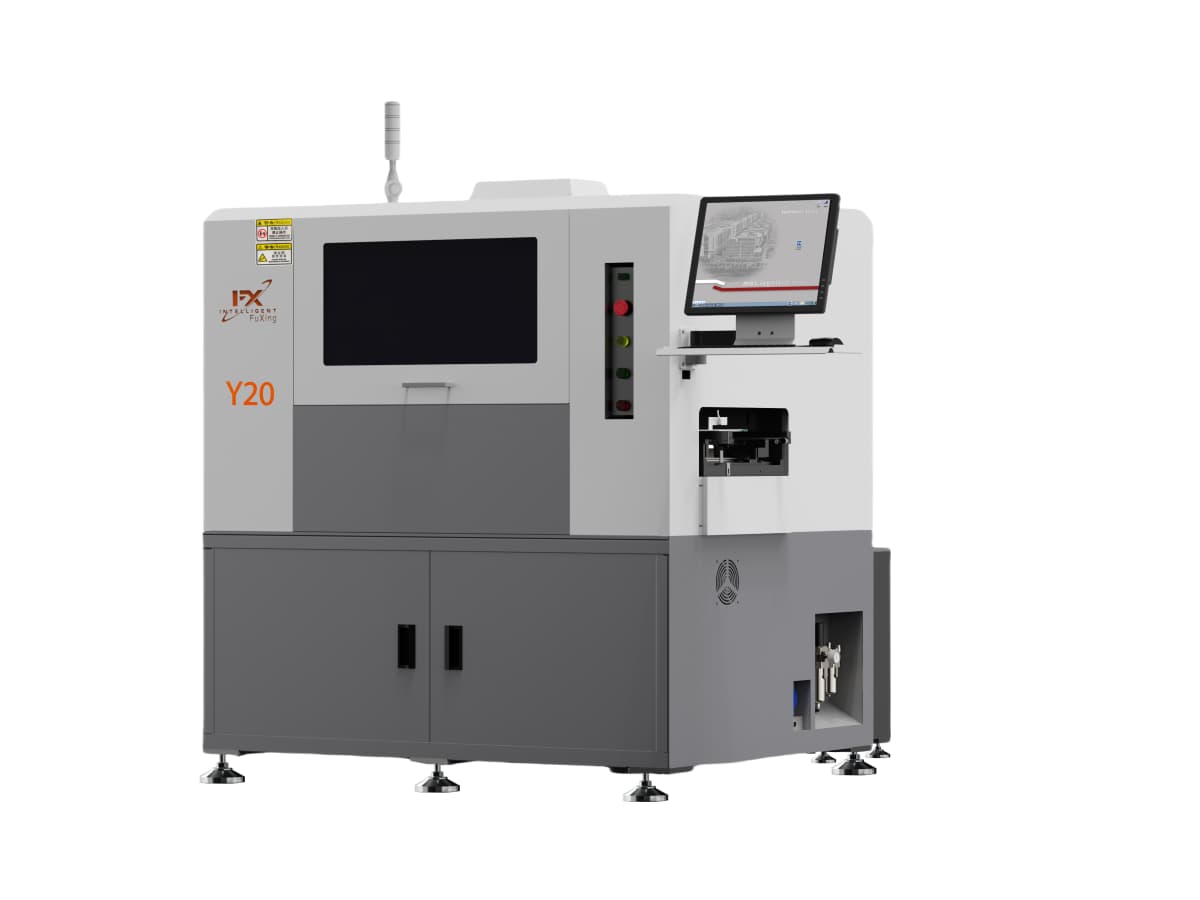
Weight is the second constraint. The Y series is rated for suction up to 150g and gripping up to 200g. An EE55 at the 100W level exceeds that on the core alone, so it needs a mechanical gripper on an odd-form inserter, or a person.
The bridge is a DIP4 package: four leads, 2.54mm between adjacent pins, and the row spacing runs from 5mm to 15mm depending on current rating. That shape is unkind to automation. Few leads, thick leads, tight pitch, and the gripper squeezes neighbouring pins together as it closes.
Polarity is worse. A bridge has a positive and a negative side, and a reversed part scraps the whole board without necessarily being visible before wave soldering. Vision can read the marking and the chamfer, but only if the polarity template is recorded in the program. Plenty of shops change coordinates for a new model and leave the polarity template alone, then discover it a day later with a full batch inserted backwards.
Speed is the other issue. Open, align, press. One bridge takes as long as a dozen resistors, and the cost per point is an order of magnitude higher.
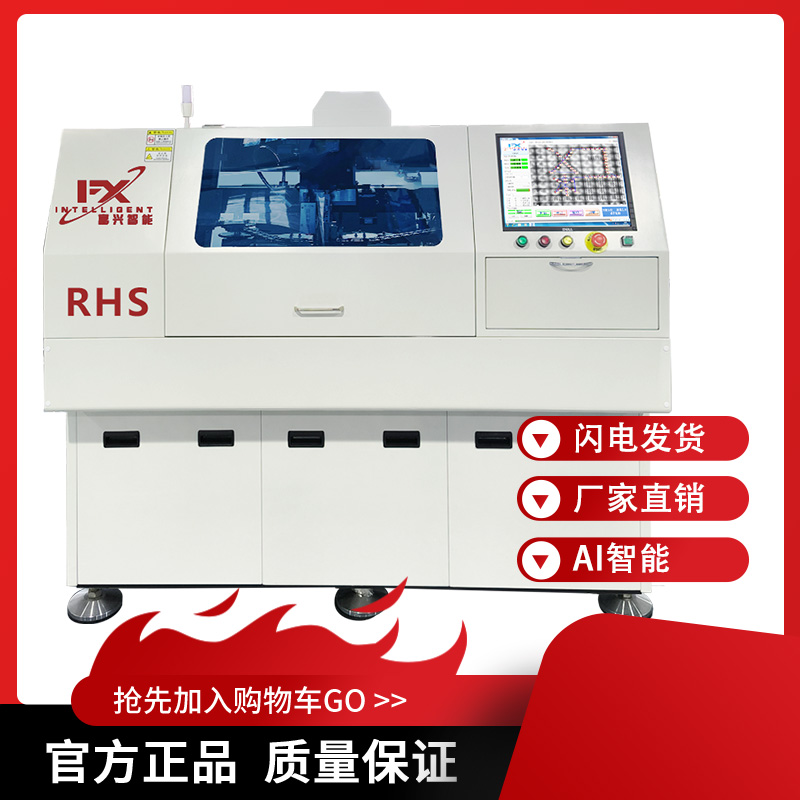
A 400V 100μF electrolytic is about 18mm in diameter and 30mm tall. Standard gripper openings on vertical machines are designed for 8 to 13mm parts, so 18mm is already out. Even with a wider gripper there is a stroke problem: the taller the part, the higher the head must lift, and insufficient lift means the head strikes components already inserted alongside.
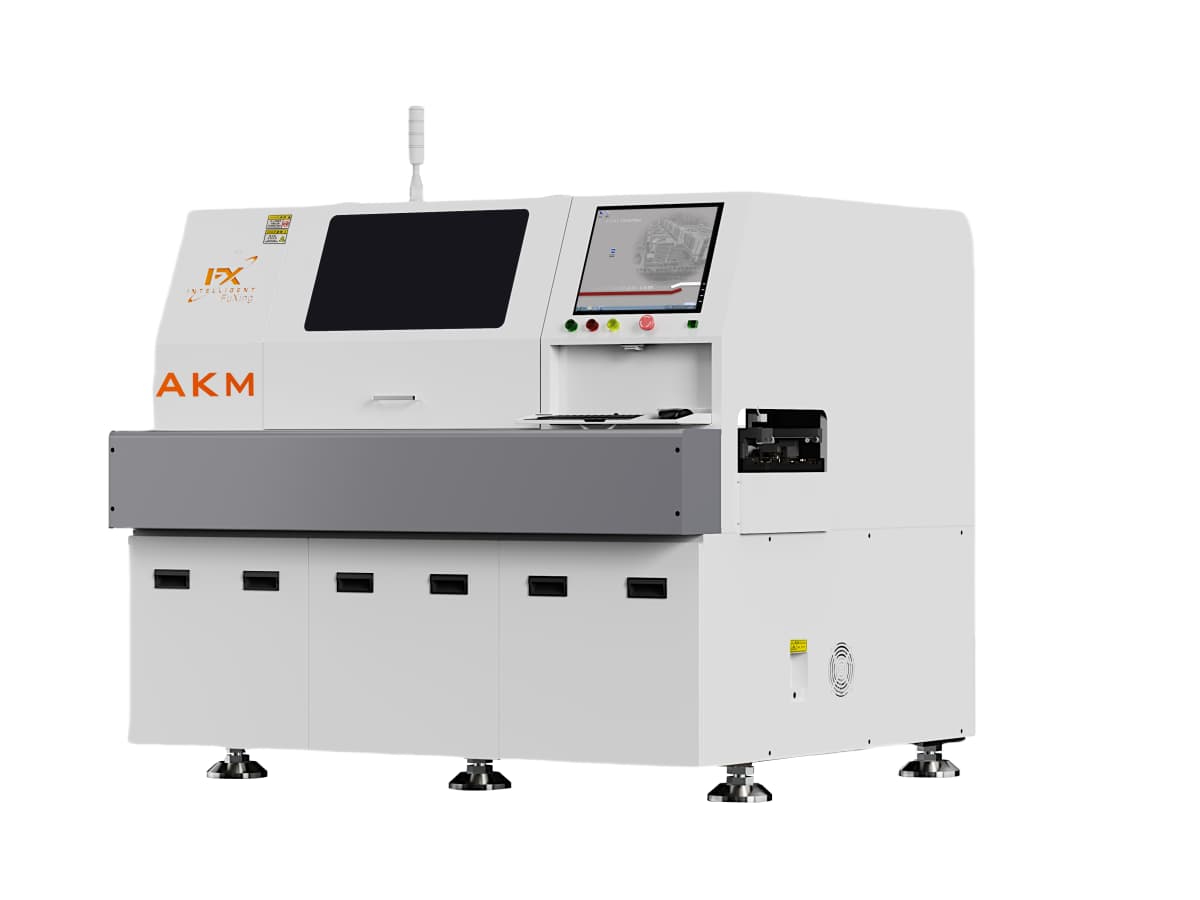
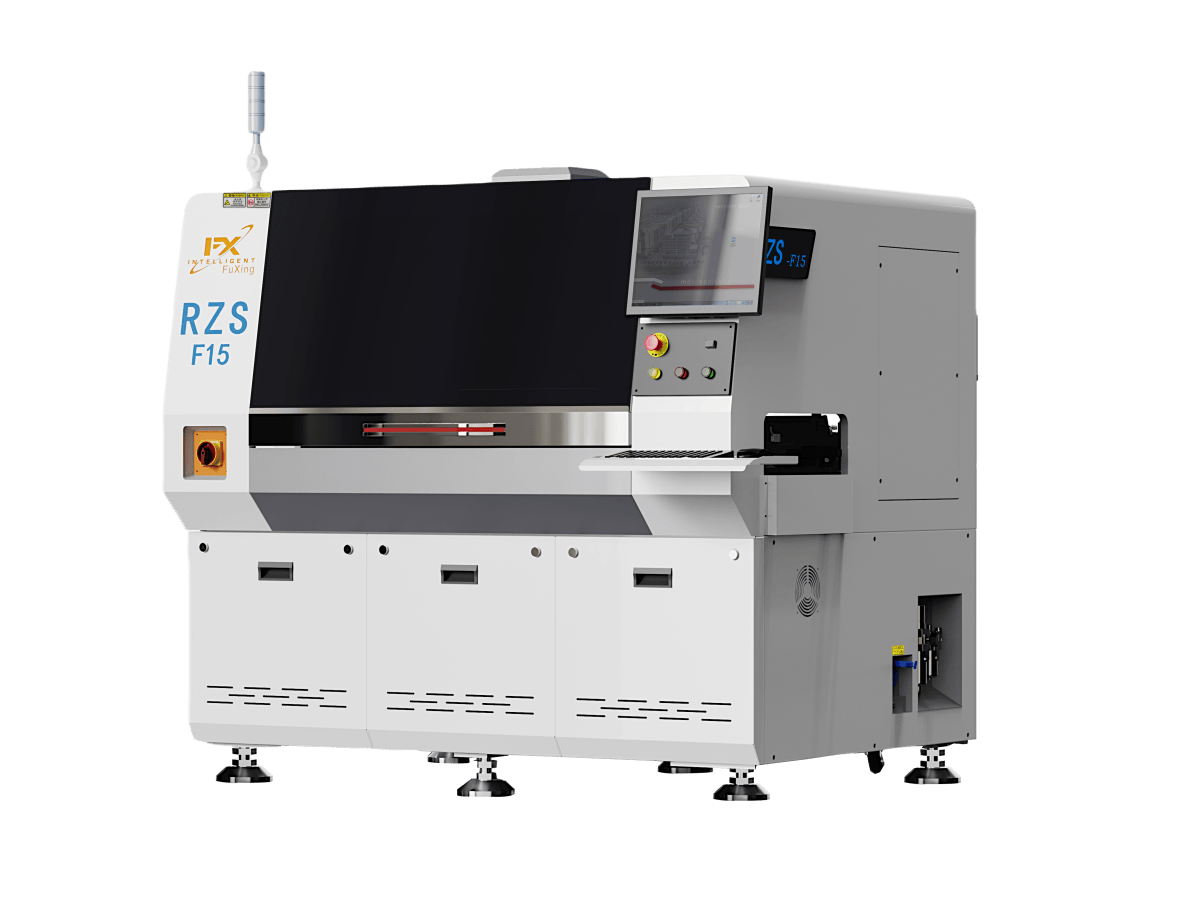
The practical answer is hand assembly, or an odd-form machine with a custom gripper. The Y series runs 0.4 seconds per point against 0.16 to 0.2 on a vertical machine, more than twice as slow, but it can hold parts a vertical machine cannot.
| Component | Assigned to | Reason |
|---|---|---|
| Taped parts (resistors, diodes, ceramic caps) | Vertical inserter | Standard tape, 0.16 to 0.2 seconds per point |
| Transformer with pitch inside the span range | Vertical or odd-form | Depends on bobbin pitch and weight |
| Large transformer | Manual | Over the gripping limit |
| Bridge rectifier | Odd-form or manual | Four leads, tight pitch, polarity |
| Electrolytic above 18mm | Manual or custom gripper | Exceeds standard gripper opening |
| Fuse holder, AC and DC sockets | Manual | Odd shapes, high insertion force |
One vertical plus one odd-form is the common pairing in adapter plants. At lower volume, start with the vertical machine alone and leave every large part to hand assembly, then add the odd-form when volume justifies it. Either way, spare parts stocking should follow the machine mix, with grippers and cutters kept separate per machine type; mixing them is how the wrong part gets fitted during a stop.
Fix two numbers first: points per board and boards per day.
Take a 45 point adapter board, 30 taped and 15 large, at 2,000 boards a day. Taped parts come to 60,000 points. A vertical machine at 0.18 seconds per point and 70 percent utilisation delivers about 14,000 points an hour, so four to five hours covers it with one machine. Large parts come to 30,000 points, and an odd-form machine at roughly 6,300 points an hour needs five hours, also one machine. Those are theoretical figures. In practice the vertical machine carries headroom because changeovers, reel changes and jam clearing all stop the line. Below 2,000 boards a day, one vertical, one odd-form and three or four manual stations is the usual scale.
First, the span range in millimetres, minimum and maximum, not "suitable for common components". Second, gripper opening and head lift height; these two decide whether the bulk capacitor can run at all. Third, maximum component weight and envelope, where the Y series reads 150g suction, 200g gripping and 40mm in length, width and height. Other makers differ, so ask for the figures.
With those three numbers, check them against the heaviest, largest and strangest part on your BOM and you have an answer in ten minutes. Accuracy of 0.01mm and a defect rate of 0.3 percent matter, but they decide how well the machine inserts, while those three numbers decide whether it inserts at all.
Q1: With so few points per board, is a MINI inserter enough?
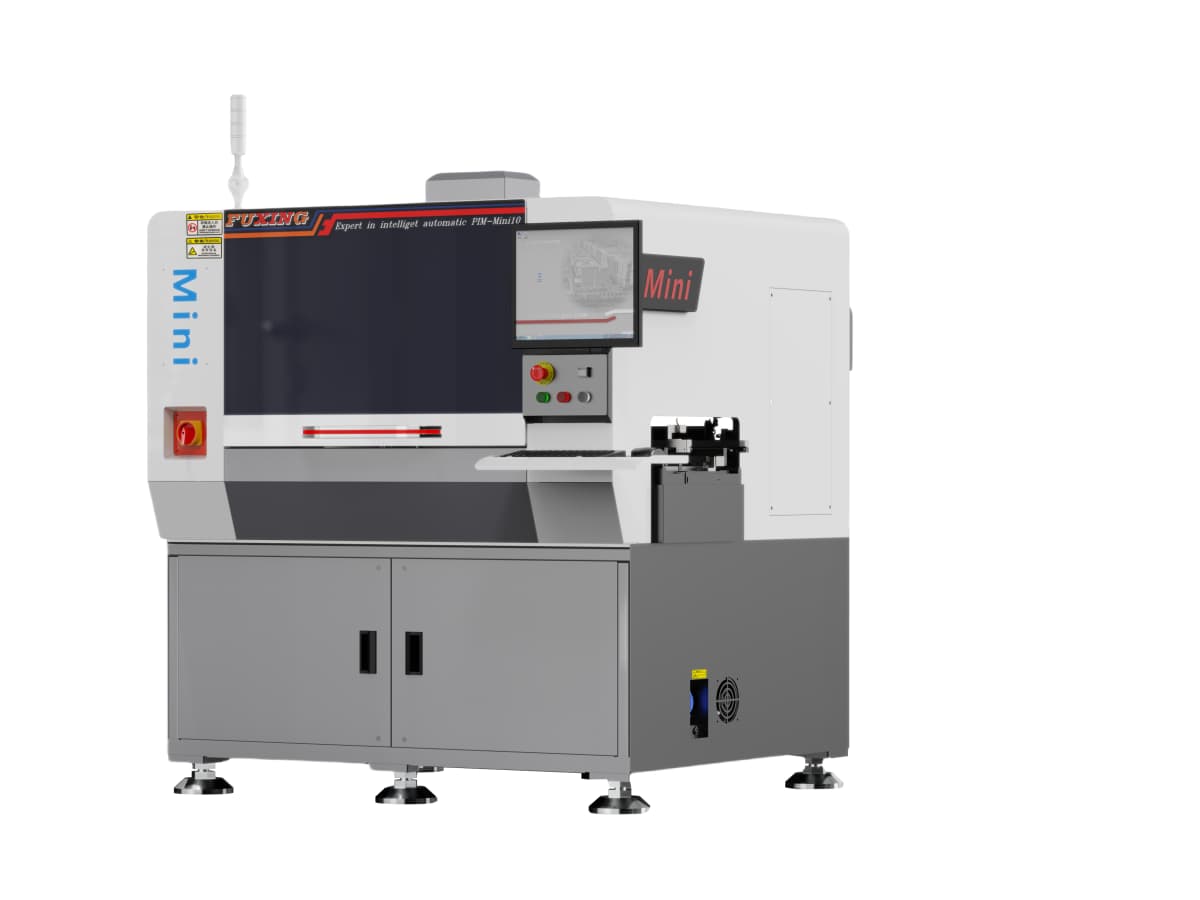
For taped parts, yes. For large parts, no. The MINI targets small boards and small batches, and its span range and gripper opening are smaller than a standard machine, so transformers and bridges largely will not run. If the large parts were going to be manual anyway, a MINI is a reasonable start. If you expect it to insert the transformer too, it will disappoint.
Q2: Can a custom gripper put the transformer on the machine?
Yes, and it needs a cost calculation. A custom gripper is built for one specific bobbin, and every new transformer model means a new gripper at a few thousand yuan. Worth it where the transformer range is stable and volume is high, not worth it where a dozen models change each year.
Q3: How do you prevent a reversed bridge rectifier?
Record a polarity template so vision compares the chamfer or marking before insertion. The first article still needs a manual polarity check; the machine only answers to the template it was given, and a wrong template inserts happily.

Copyright © 2002-2026 Shenzhen Fulxing Intelligent Equipment Co., Ltd. All rights reserved. ICP License:
Service Hotline